Leave Your Message
China has become a major sourcing base for Stainless Steel Coil Tubing, serving energy, chemical processing, instrumentation, and heat-transfer applications. Yet choosing a manufacturer requires more than comparing export prices. A polished website proves little.
Harry Brearley, the British metallurgist credited with developing stainless steel, reportedly said, “The discovery of stainless steel was a mistake.” The remark reflects an important lesson: material performance depends on controlled production, not marketing language. For coil tubing, buyers should examine stainless grade, outside diameter, wall thickness, coil length, surface finish, and forming consistency. Small variations can affect installation, pressure stability, and long-term corrosion resistance.
Experience matters here.
A dependable Chinese manufacturer should provide heat numbers, mill test certificates, dimensional reports, and traceable inspection records. ASTM, ASME, EN, and customer-specific requirements may apply, depending on the service environment. Welded tubing also deserves careful review. Ask about weld technology, annealing, eddy-current testing, hydrostatic testing, and the supplier’s method for managing welds during coiling.
The strongest manufacturers usually show evidence through factory audits, sample testing, and repeat international orders. They explain limitations clearly. That is a useful sign.
This guide examines China’s leading Stainless Steel Coil Tubing manufacturers through technical capability, production equipment, material control, certification, customization, delivery performance, and after-sales support. The ranking cannot be perfectly objective. Supplier strengths change over time, and one factory may suit instrumentation better than another suits oilfield service. Readers should verify current certificates, inspect samples, and match each manufacturer with the actual operating conditions. A cheaper coil may become expensive when installation delays, leakage risks, or inconsistent dimensions appear.
What Is Stainless Steel Coil Tubing?
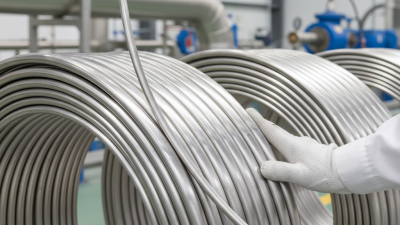
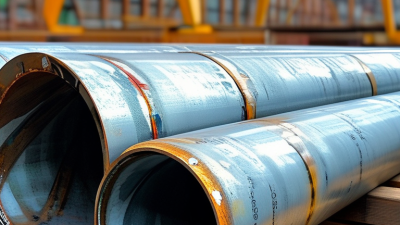
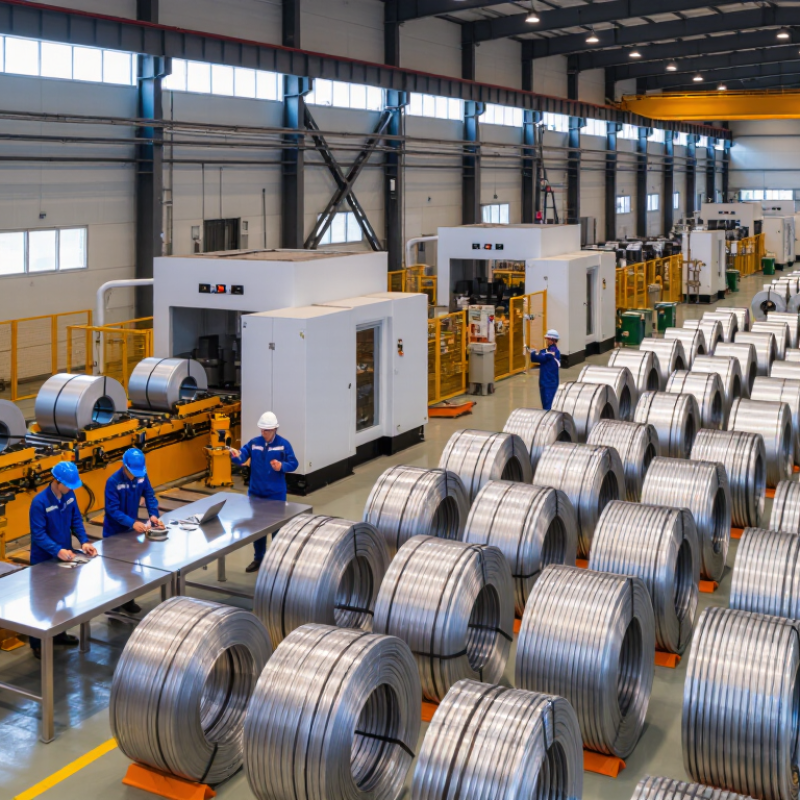
Stainless steel coil tubing is a long, continuous tube wound into a compact coil. Unlike straight pipe, it can be transported and installed with fewer joints. Common grades include 304L, 316L, and duplex stainless steel. Grade selection depends on chloride exposure, temperature, pressure, and fluid chemistry.
It is used in instrumentation, heat exchangers, hydraulic control lines, and chemical processing. The coiled form can follow tight routes around equipment, but bending creates stress and may reduce dimensional accuracy. That detail matters. ASTM A269/A269M emphasizes tubing quality for general corrosion-resistant service, while ASME B31.3 guides process-piping design and testing. These standards do not replace project-specific engineering.
The market also reflects wider stainless steel demand. World Stainless reported global crude stainless steel production of about 58.4 million tonnes in 2023. This figure does not measure coil tubing directly, but it shows the scale of the material supply base. When comparing manufacturers, buyers should examine weld control, heat treatment, eddy-current testing, surface finish, and traceable inspection records. A bright surface can look impressive. It proves little by itself. In practice, ovality, wall-thickness variation, and coil memory often reveal manufacturing weaknesses. Some specifications remain incomplete, especially when buyers state only the grade and outside diameter. That is not enough. A reliable purchase should define pressure testing, length tolerance, packing, and documentation before production begins.
| Data Dimension | Typical Information | Why It Matters When Selecting a Supplier |
|---|---|---|
| Product definition | Stainless steel coil tubing is a continuous-length tube wound into a coil for storage, transport, and installation. | Continuous tubing can reduce the number of field joints and simplify installation in compact systems. |
| Common stainless steel grades | 304/304L, 316/316L, and 321 are widely used grades. 316L is commonly selected for improved resistance to chlorides and many chemical environments. | The grade should match the fluid, temperature, chloride exposure, and required corrosion resistance. |
| Typical outside diameter | Common product ranges include approximately 6 mm to 50.8 mm outside diameter, although available sizes depend on the mill and application. | Confirm outside diameter, wall thickness, inside diameter, and dimensional tolerances before ordering. |
| Wall thickness | Typical wall thicknesses range from about 0.5 mm to 3.0 mm for many instrumentation and industrial applications. | Wall thickness affects pressure capacity, flexibility, weight, bending performance, and corrosion allowance. |
| Manufacturing form | Tubing may be supplied as seamless or welded-and-drawn construction, depending on the required specification and service conditions. | The construction method should be verified against the applicable design code, purchase specification, and service risk. |
| Relevant ASTM specifications | ASTM A269 is commonly associated with general-service austenitic stainless steel tubing; ASTM A213 covers seamless boiler, superheater, and heat-exchanger alloy-steel tubing. | The specification defines important requirements such as materials, dimensions, testing, and acceptance criteria. |
| Typical surface finishes | Common finishes include annealed, bright annealed, pickled, mechanically polished, and electropolished surfaces. | Surface condition influences cleanliness, corrosion performance, friction, appearance, and suitability for sanitary service. |
| Pressure capability | Allowable pressure is not a fixed value; it depends on grade, outside diameter, wall thickness, temperature, manufacturing condition, and design code. | A supplier should provide pressure calculations or certified data for the exact tube dimensions and operating temperature. |
| Temperature considerations | Austenitic stainless steels retain useful high-temperature properties, but allowable stress and oxidation or corrosion resistance vary with grade and service environment. | Specify minimum and maximum operating temperatures as well as thermal cycling conditions. |
| Testing and inspection | Common checks may include chemical analysis, dimensional inspection, tensile testing, hardness testing, hydrostatic or pneumatic testing, and non-destructive examination when specified. | Inspection requirements help verify material identity, weld integrity, dimensional conformity, and leak resistance. |
| Coil length | Coil length is project-specific and may range from short installation coils to several hundred metres, subject to tube size, wall thickness, equipment capacity, and transport limits. | Longer continuous lengths can reduce connections, but packaging, handling, and allowable pressure-drop requirements must be considered. |
| Common applications | Instrumentation lines, hydraulic control systems, heat exchangers, chemical processing, sampling systems, subsea equipment, and gas or liquid transfer. | The application determines the required grade, pressure rating, cleanliness level, surface finish, and testing package. |
| Supplier evaluation criteria | Review material traceability, applicable standards, welding and drawing controls, dimensional capability, testing facilities, certifications, packaging, and production lead time. | A documented quality system and complete inspection records provide stronger assurance than price or nominal size alone. |
Note: Dimensions, pressure ratings, coil lengths, and available finishes are typical industry ranges rather than universal limits. Final requirements should be confirmed against the applicable standard, design code, operating conditions, and purchase specification.