Leave Your Message
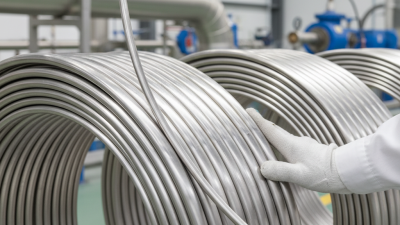
Stainless Steel Coil Tubing supports demanding applications in instrumentation, heat transfer, medical equipment, and energy systems. Its continuous length reduces fittings, potential leak points, and installation time. A bright, clean coil can also reveal surface defects before delivery. Small details matter.
Industry data confirms the market’s scale. World Stainless reported global crude stainless steel production of approximately 58.4 million tonnes in 2023. This large production base supports diverse tubing grades, including 304, 316L, 321, and duplex stainless steels. Meanwhile, reports from Grand View Research and MarketsandMarkets identify rising demand for corrosion-resistant tubing in chemical processing, oil and gas, and industrial automation. These reports examine broader stainless steel and tubing markets, not every coil manufacturer. That distinction deserves attention.
This guide reviews China’s top 10 Stainless Steel Coil Tubing manufacturers through practical purchasing criteria. The evaluation considers material traceability, ASTM and ASME compliance, dimensional control, welding technology, pressure testing, surface finish, and export experience. It also examines production capacity, minimum order quantities, lead times, and after-sales support. A polished website is not enough. Buyers should request mill certificates, inspection records, sample coils, and clear tolerances. Manufacturer rankings can change as factories expand or quality systems weaken. Therefore, this list is a useful starting point, not an absolute verdict. Real performance depends on grade selection, operating temperature, pressure, media, and installation conditions. Think beyond price. Reliability is built into every meter.
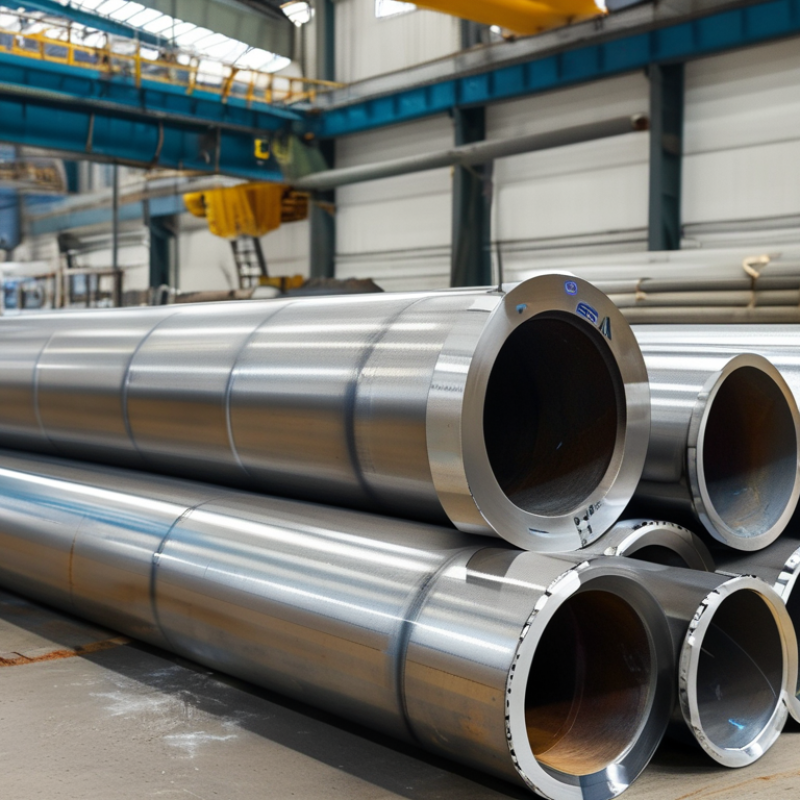
China Top 10 Stainless Steel Coil Tubing Manufacturers
China’s top ten stainless steel coil tubing manufacturers should be assessed by practical industry criteria, not advertising claims. Key factors include stainless steel grade control, wall-thickness consistency, weld integrity, dimensional accuracy, and corrosion resistance. Experienced buyers should request heat numbers, mill certificates, inspection records, and sample test results. A reliable producer can explain how tubing performs during coiling, bending, pressure cycling, and long-term exposure.
Production experience matters. Manufacturers serving oil and gas, heat exchange, instrumentation, and chemical processing often maintain stronger process controls. Look for laser measurement, eddy-current testing, hydrostatic testing, and documented quality procedures. Export capability also matters, including protective packaging, traceable batches, stable lead times, and clear technical communication. However, no ranking is perfect. A large factory may offer capacity but weaker flexibility. A smaller plant may provide better customization but less production redundancy. That trade-off deserves careful review.
Tips: Compare three samples before signing a contract. Check surface marks under direct light. Measure coil length and wall thickness independently. Ask how rejected material is isolated. Confirm the tubing standard, pressure requirement, tolerance range, and delivery condition in writing. Do not rely only on certificates. Factory visits and third-party inspections reveal details that brochures often miss. A careful buyer should also review recent delivery performance, because even strong technical systems can fail under rushed schedules.
| Rank | Industry Criterion | Evaluation Metric | Applicable Standard or Reference | Representative Qualification Benchmark | Why It Matters |
|---|---|---|---|---|---|
| 1 | Material Grade Capability | Availability of austenitic, duplex, and nickel-alloy tubing grades | ASTM A269, ASTM A789, ASTM A790, ASTM B163 | Common grades include 304/304L, 316/316L, 2205, 2507, and selected nickel alloys | A broad grade portfolio allows the manufacturer to match tubing materials with corrosion, pressure, and temperature requirements. |
| 2 | Dimensional Accuracy | Control of outside diameter, wall thickness, ovality, and coil length | ASTM A999/A999M and applicable product specifications | Dimensional tolerances must be controlled according to the ordered specification, with documented inspection results | Consistent dimensions support reliable installation, fitting compatibility, and predictable flow performance. |
| 3 | Pressure and Leak Integrity | Hydrostatic testing, pneumatic testing, and non-destructive examination capability | ASTM A269, ASTM A789, ASTM A1016/A1016M | Each finished tube or specified production lot should receive the testing required by the purchase specification | Pressure and leak testing helps verify the integrity of tubing used in instrumentation, heat transfer, and process systems. |
| 4 | Weld Quality and Seam Control | Weld procedure qualification, seam inspection, and weld-zone traceability | ASTM A269, EN 10217-7, ISO 3834 | Welded coil tubing should have controlled welding parameters, qualified procedures, and documented inspection records | Stable weld quality reduces the risk of leakage, cracking, and premature failure in long continuous coils. |
| 5 | Surface Finish and Cleanliness | Surface condition, pickling or passivation, internal cleanliness, and roughness control | ASTM A967/A967M, ASTM A380/A380M, ISO 4287 | The required finish should be stated by application, such as annealed and pickled, mechanically polished, or electropolished | Proper surface treatment improves corrosion resistance and reduces contamination in hydraulic, chemical, and sanitary service. |
| 6 | Heat Treatment Capability | Solution annealing, temperature uniformity, cooling control, and heat-treatment traceability | ASTM A269, ASTM A789, ASTM A790, EN 10216-5 | Heat treatment should be performed within the grade-specific requirements and supported by batch records or test certificates | Correct heat treatment helps preserve corrosion resistance, ductility, and mechanical performance. |
| 7 | Mechanical and Corrosion Testing | Tensile strength, yield strength, elongation, hardness, intergranular corrosion, and pitting resistance testing | ASTM A370, ASTM A262, ASTM G48, ISO 3651-2 | Testing should be selected according to alloy grade, service environment, and contractual requirements | Verification testing confirms that the tubing can withstand the intended mechanical and corrosive operating conditions. |
| 8 | Quality Management System | Documented quality procedures, calibration, corrective action, traceability, and audit controls | ISO 9001:2015 | A documented and independently audited quality management system with controlled inspection records | A formal quality system improves process consistency and provides evidence that requirements are being controlled. |
| 9 | Compliance and Certification Support | Mill test certificates, material traceability, pressure-equipment documentation, and export compliance | EN 10204, PED 2014/68/EU where applicable, ISO 10474 | Material certificates should identify heat number, grade, chemical composition, mechanical results, and applicable tests | Complete documentation supports regulatory approval, customer audits, and end-to-end material traceability. |
| 10 | Application and Delivery Capability | Maximum coil length, custom dimensions, packaging, lead-time control, and technical support | Customer purchase specification and project quality plan | Capability should be demonstrated through approved drawings, production schedules, packing procedures, and inspection plans | Reliable customization and delivery performance are essential for shutdown projects, offshore systems, instrumentation, and process plants. |