How to Choose the Right Mild Steel Tube for Your Project?
Choosing the right Mild Steel Tube is crucial for any project. According to John Davis, an expert in the field, “The right tube can determine the success of your structure.” Whether you're constructing a building or designing machinery, the quality of your materials matters. Mild Steel Tubes offer strength, flexibility, and cost-effectiveness. However, not all tubes are created equal. This industry is vast and sometimes confusing.
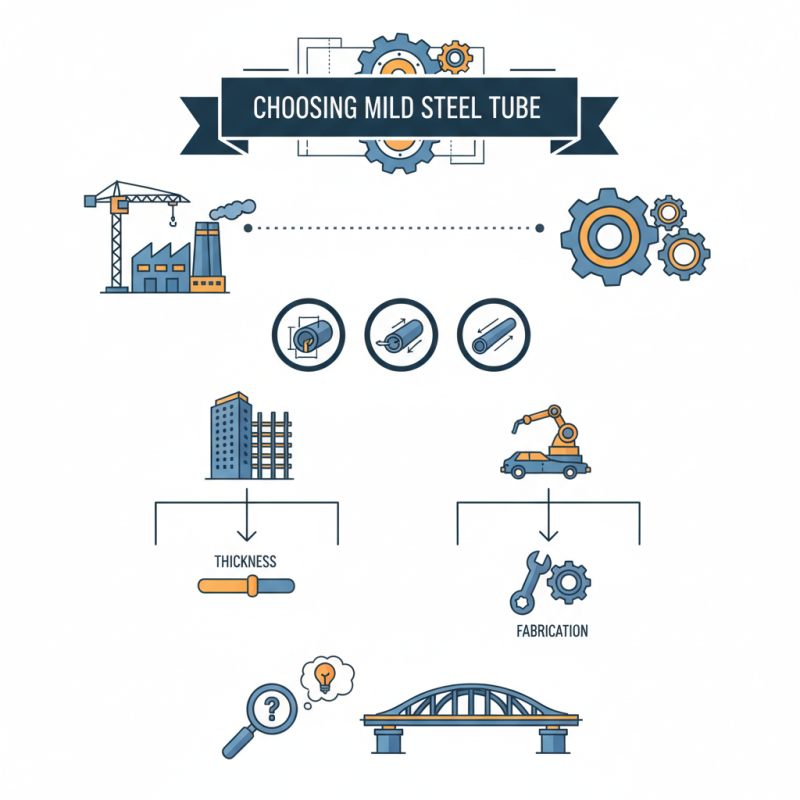
Factors like thickness, diameter, and length play a significant role in your project's outcome. It's essential to consider your project's specific requirements. For instance, a construction project may need thicker tubes for structural support. On the other hand, a fabrication project may require different specifications altogether. It's easy to overlook these details and end up with unsuitable materials.
Research and consultation with experts can help guide your choices. Mistakes can be costly and frustrating. Take the time to reflect on your needs before proceeding. The right Mild Steel Tube could make all the difference in durability and functionality. Always ask the tough questions before you buy.
Understanding Mild Steel: Properties and Applications
Mild steel is a versatile material, commonly used in various applications. Its composition typically includes about 0.05% to 0.25% carbon, providing good ductility. According to the World Steel Association, mild steel accounts for approximately 80% of steel production globally. This widespread use is due to its affordability and ease of fabrication.
When considering mild steel for projects, it's essential to assess its properties. It offers excellent weldability, making it a preferred choice for construction. Reports from the American Institute of Steel Construction indicate that structures made from mild steel can endure heavy loads without significant deformation. However, it is susceptible to corrosion, requiring protective coatings in certain environments.
While mild steel is suitable for many applications, not every project may benefit from it. In some cases, its lower tensile strength compared to other alloys could pose challenges. Evaluating structural requirements and environmental conditions can help determine if mild steel will meet project demands. It's crucial to reflect on the specific context in which mild steel will be employed, ensuring the material selection aligns with project goals.
Understanding Mild Steel: Properties and Applications
Identifying Your Project Requirements for Mild Steel Tubes
When selecting mild steel tubes for your project, understanding your requirements is crucial. Consider factors like the tube's dimensions, wall thickness, and weight limits. Each of these elements can significantly impact the functionality and stability of your final product. Analyze your project's specific needs fully before making a decision.
Tips: Always measure twice. Accurate measurements can save time and reduce material waste. Don't rush into purchasing the first option you see. Review multiple sources to understand variations.
Another significant aspect is the application of the tube. Will it be used for structural purposes or fluid transport? Mild steel tubes can serve different roles. Think about the environment, too. Corrosion risks might necessitate additional protection measures. Consider the trade-offs between cost and quality. A cheap option may not perform well in the long run.
Tips: Investigate maintenance requirements. Some mild steel tubes need regular upkeep. Be clear on what is sustainable for your project long-term. Remember, choosing the right mild steel tube is about balancing specifications with your project's goals. Careful consideration upfront saves headaches later.
How to Choose the Right Mild Steel Tube for Your Project?
| Dimension (mm) |
Weight per Meter (kg) |
Wall Thickness (mm) |
Application |
| 20 x 20 |
1.5 |
1.5 |
Furniture, Decor |
| 25 x 25 |
2.3 |
1.6 |
Framework, Railing |
| 50 x 30 |
4.0 |
2.0 |
Structural, Support |
| 40 x 40 |
3.0 |
2.5 |
Machinery, Hardware |
| 60 x 40 |
5.5 |
3.0 |
Construction, Automotive |
Evaluating Different Sizing Options for Mild Steel Tubes
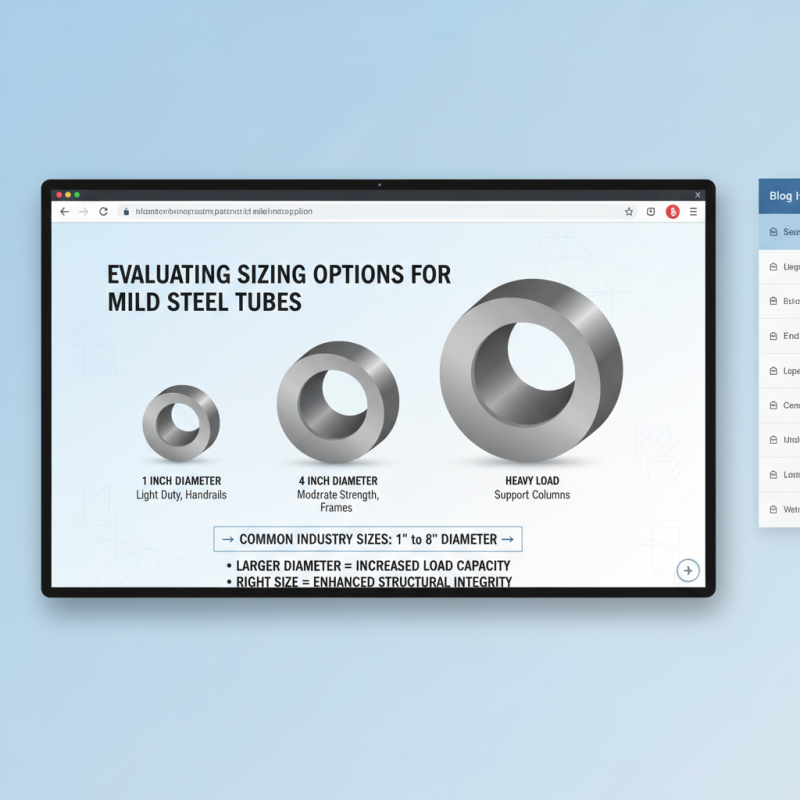
Choosing the right mild steel tube requires understanding different sizing options. Mild steel tubes come in various dimensions, affecting their strength and application. Industry reports indicate that the most common sizes are 1 inch to 8 inches in diameter. Selecting the right diameter enhances load-bearing capacity and structural integrity.
When evaluating sizes, consider wall thickness. Thicker walls provide additional strength but may increase weight. The American Institute of Steel Construction recommends balancing these factors based on your project requirements. For instance, a wall thickness of 0.120 inches is ideal for medium loads, while heavy-duty applications may require 0.250 inches.
Tip: Always consult engineering guidelines specific to your application. Overestimating needs can lead to unnecessary costs. Additionally, be aware that incorrect sizing can compromise safety and durability.
Mild steel tube lengths also vary. Standard lengths are typically 20 feet, but custom sizes are available. Shorter tubes may be easier to work with but can lead to more welds. Each connection presents potential weaknesses. Evaluate your design to determine the most efficient approach.
Comparing Mild Steel Tube Grades and Their Suitability
When selecting mild steel tubes, understanding the different grades is crucial. Each grade has varying compositions, affecting strength, ductility, and corrosion resistance. For instance, Grade S235 is commonly used due to its good weldability and moderate tensile strength. It is suitable for structural applications but may not endure extreme environmental conditions.
On the other hand, Grade S275 offers higher yield strength. This makes it ideal for projects requiring durability under heavy loads. However, its increased strength comes with reduced formability. Contractors must consider the project's specific demands. Choose a grade that balances strength with ease of fabrication.
It’s essential to reflect on the project requirements. While a stronger grade may seem advantageous, it could complicate fabrication processes. Evaluating these factors is crucial for long-term performance and cost-effectiveness. Don't rush the decision. A thorough analysis will yield the best results for your project.
Assessing Supplier Reliability and Quality Assurance Standards
When selecting mild steel tubes, assessing supplier reliability is crucial. A recent report from the American Institute of Steel Construction highlights that nearly 30% of industry projects face delays due to quality inconsistencies. These delays can stem from inadequate supplier standards. Reliable suppliers adhere to strict quality assurance protocols. They provide certifications like ISO 9001, ensuring their products meet industry benchmarks.
Quality assurance standards must also be transparent. Some suppliers offer documented test results, which evaluate the material properties. Factors such as tensile strength and corrosion resistance are essential. Research indicates that 70% of failures in construction projects trace back to material deficiencies. Therefore, it is wise to ask for these documents before making any major purchases.
Finally, consider customer review data. Engaging with peer networks can provide insights into supplier reliability. Industry reports indicate that companies with positive feedback maintain a 40% higher satisfaction rate among clients. Engaging with suppliers who prioritize transparency and quality will lead to better project outcomes.