Best Galvanized Round Tubing for Global Buyers in 2026
In the realm of construction and manufacturing, "Galvanized Round Tubing" emerges as a pivotal material in 2026. Its popularity is driven by its durability and corrosion resistance. Global buyers face a myriad of choices, making the selection process more complex. Quality varies significantly among suppliers, posing challenges.
The characteristics of galvanized round tubing are integral to various applications. From automotive industries to agricultural uses, its versatility cannot be overlooked. However, buyers must assess the reliability of suppliers to ensure they receive products that meet their expectations. Some may find it difficult to navigate these options, raising questions about overall quality.
As the market evolves, understanding specifications and standards for galvanized round tubing is essential. It is not just about purchasing materials, but about making informed decisions that can impact project outcomes. Buyers should reflect on their experiences, learning from past choices to improve future purchases. This careful consideration can lead to more successful projects and greater satisfaction in the long run.
Overview of Galvanized Round Tubing and Its Importance
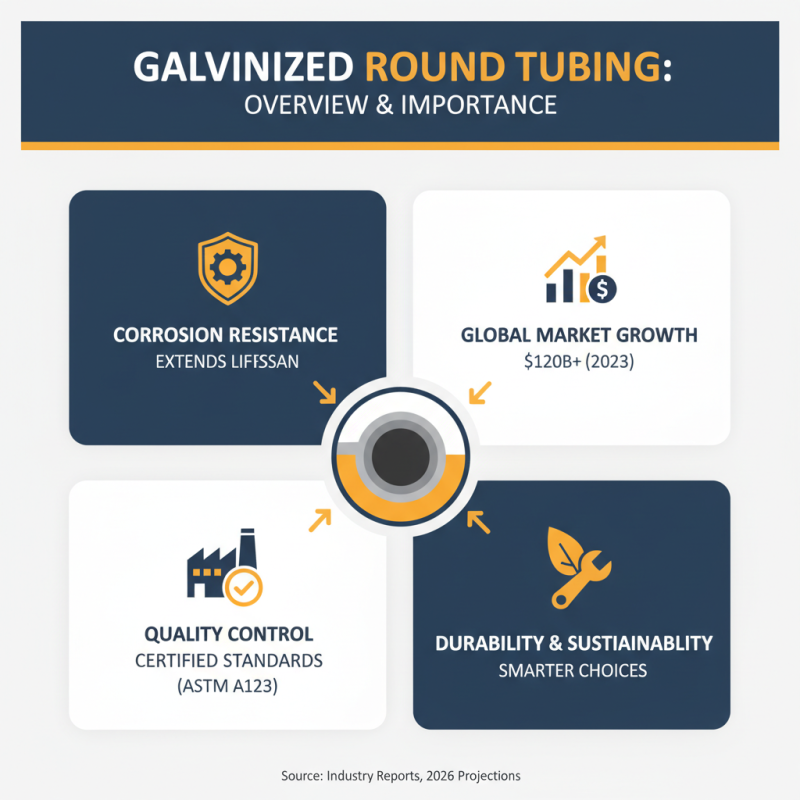
Galvanized round tubing remains a vital component across construction, automotive, and industrial sectors. Its corrosion resistance extends product lifespans, reducing maintenance costs over decades. Industry reports reveal galvanized steel’s global market value surpassed $120 billion in 2023, with demand rising steadily. This growth highlights its critical role in durable infrastructure projects and eco-friendly designs. The galvanization process creates a robust zinc coating that shields steel from moisture and chemicals. Yet, variability in coating thickness can lead to inconsistent performance; manufacturers must prioritize quality control. For buyers in 2026, selecting tubing with certified galvanization standards—such as ASTM A123—can prevent costly failures. Precise measurement of zinc layer ensures longevity, especially in humid environments. Despite proven benefits, some industries grapple with supply shortages and fluctuations in steel pricing. As markets evolve, experts suggest prioritizing suppliers with transparent quality assurance practices. Balancing affordability with reliability remains a challenge, but the importance of galvanized tubing’s protective qualities is undeniable. Knowing these factors can help global buyers make smarter, more sustainable choices for their projects.
Key Features to Look for in Quality Galvanized Round Tubing
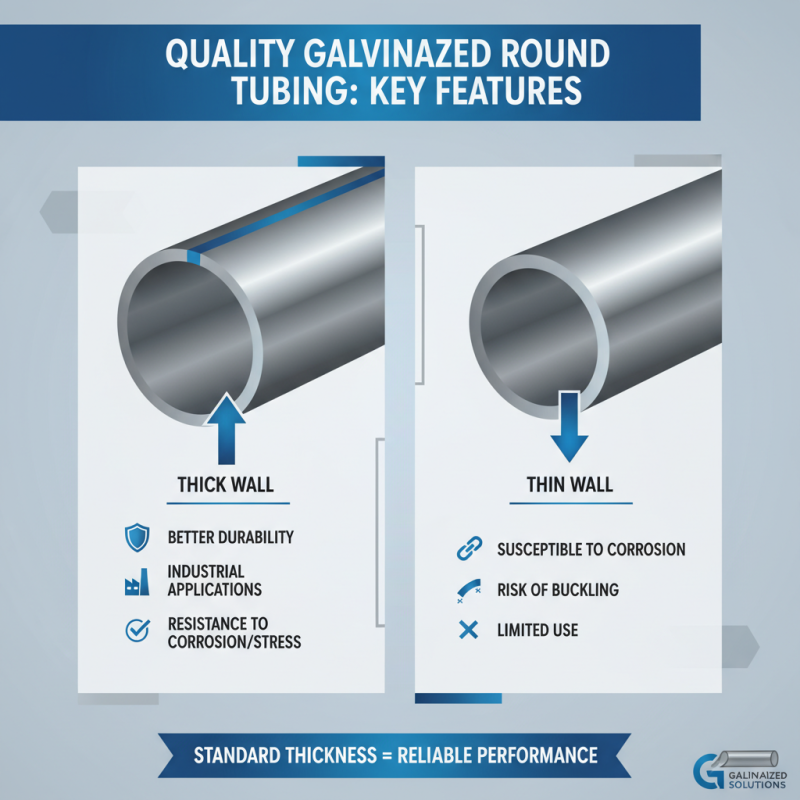
When selecting galvanized round tubing, there are key features that indicate quality. The first is the thickness of the tubing wall. Thicker walls offer better durability, while thinner walls may corrode or buckle under stress. A standard thickness can ensure better performance in various applications.
Another important aspect is the zinc coating. A higher zinc weight provides better corrosion resistance. Look for tubing with consistent coating throughout the surface. If the coating is uneven, it may lead to premature rusting. Additionally, check for smooth edges; sharp or jagged ends can pose safety risks during handling.
Weld quality is a crucial feature as well. Quality welds exhibit uniformity and strength. Inspecting the welds can give insights into the manufacturing process. Lastly, consider the straightness of the tubing. Warped tubing may require additional adjustments during installation. Small imperfections can lead to larger issues down the line.
Each feature contributes to the overall reliability and lifespan of the tubing. However, personal experience and the specific application will ultimately guide the decision.
Global Market Trends and Demand Forecast for 2026
The galvanized round tubing market is poised for significant growth in 2026. Increased infrastructure development and a surge in industrial activities are key drivers behind this trend. Countries focused on urbanization will likely see higher demand. This tubing is favored for its durability and resistance to corrosion, making it an ideal choice for construction projects.
Market research indicates that environmental concerns are shaping buyer preferences. Sustainable manufacturing processes and recyclable materials are becoming essential criteria. Buyers are likely to seek suppliers that demonstrate commitment to eco-friendly practices. However, challenges remain. Supply chain disruptions and fluctuating raw material prices could impact availability and costs.
Data suggests that regional markets will display varying trends. Some areas may experience saturation, while others have untapped potential. Buyers must stay informed about these dynamics. Having access to up-to-date market insights will be crucial in making informed purchasing decisions. Balancing cost, quality, and sustainability will remain essential for global buyers navigating this evolving landscape.
Top Manufacturers and Suppliers of Galvanized Round Tubing Worldwide
In the global marketplace, galvanized round tubing plays a crucial role in various industries. Its durability and resistance make it ideal for construction and manufacturing. The demand for high-quality galvanized tubing is steadily increasing. A recent industry report indicates that the global galvanized steel market is projected to reach $230 billion by 2026, highlighting the importance of strong suppliers.
Top manufacturers and suppliers focus on innovative production techniques. They utilize advanced coatings to enhance corrosion resistance. Many companies are investing in sustainable practices to meet growing environmental concerns. Reports suggest that companies using eco-friendly processes are gaining competitive advantages, appealing to more conscious buyers.
However, some manufacturers struggle with quality control. This inconsistency can lead to unreliable products in the market. Buyers must be cautious in selecting suppliers. Verifying credentials and assessing product quality can prevent potential issues. This diligence ensures that customers receive both durability and reliability in their purchases.
Best Galvanized Round Tubing for Global Buyers in 2026
| Country |
Annual Production (Tons) |
Key Specifications (mm) |
Main Application Areas |
| USA |
150,000 |
20 - 100 |
Construction, Automotive |
| China |
300,000 |
25 - 90 |
Manufacturing, Furniture |
| Germany |
120,000 |
30 - 80 |
Industrial, Engineering |
| India |
180,000 |
15 - 75 |
Construction, Water Supply |
| Brazil |
90,000 |
20 - 70 |
Agriculture, Infrastructure |
Applications and Uses of Galvanized Round Tubing in Various Industries
Galvanized round tubing plays a vital role across diverse industries, thanks to its durability and corrosion resistance. In construction, it’s widely used for fencing, handrails, and support structures. Steel frameworks in bridges and buildings often rely on these tubes for stability and longevity. Farmers utilize them for fencing and greenhouse frames, appreciating their weather resistance.
In the automotive sector, galvanized tubing forms parts of exhaust systems and framework supports. Its resistance to rust extends product life significantly. Likewise, furniture manufacturers incorporate galvanized round tubing into outdoor tables and chairs, boosting their weather durability. While these applications benefit from corrosion protection, frequent exposure to extreme elements can still weaken the coating over time.
Industrial machinery and equipment also depend on galvanized tubing for safety cages or guarding structures. Here, reliability is critical, yet the challenge lies in ensuring consistent coating quality. As industries evolve, the demand for stronger, more adaptable tubing increases. Manufacturers need to balance cost, strength, and corrosion resistance carefully. The right galvanized tubing enhances safety and performance but requires ongoing quality assessment to meet rising standards.