China Top 10 Spiral Pipe Manufacturers for Global Buyers
China has become a major source of spiral-welded steel pipe for water infrastructure, oil and gas projects, piling, and industrial construction. This guide introduces China’s top 10 Spiral Pipe manufacturers for global buyers. It focuses on practical purchasing concerns, not promotional claims alone.
The evaluation considers production capacity, steel grades, welding technology, diameter ranges, coating systems, inspection procedures, and export experience. Factory audits, mill certificates, hydrostatic testing, ultrasonic inspection, and dimensional checks can reveal important differences. Reliable suppliers should explain their standards clearly and provide traceable quality records. They should also understand international specifications, project drawings, packing requirements, and delivery schedules. Small details matter. A damaged pipe end can delay an entire installation.
Price still influences every procurement decision. However, the lowest quotation may hide weaker coatings, unclear tolerances, or incomplete documentation. Buyers should compare total project cost, including testing, freight, storage, and possible rework. Communication also deserves attention. Fast replies are useful, but accurate technical answers matter more. Some manufacturers may appear strong online yet offer limited support after shipment. That risk deserves careful reflection.
This overview is designed as a practical starting point for engineers, distributors, contractors, and sourcing teams. It does not replace factory verification or independent inspection. Product capabilities and certifications can change over time. Please confirm current evidence before signing a contract. The strongest supplier is not always the largest. It is the one that consistently matches specifications, communicates honestly, and delivers usable pipe when the project needs it.
What Spiral Pipes Are and Why Global Buyers Use Them
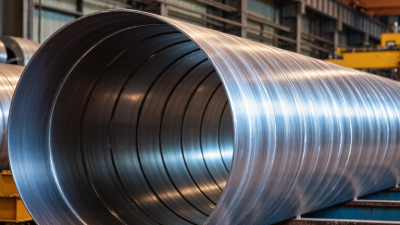
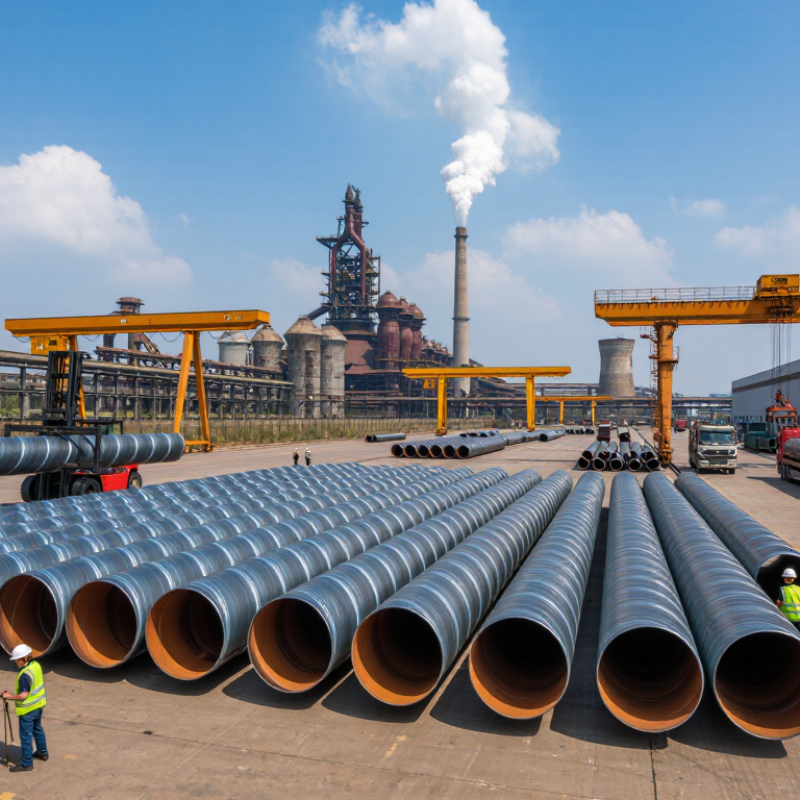
Spiral pipes are steel tubes formed from helically rolled strip and welded along a continuous seam. Their large diameters suit water transmission, drainage, piling, and selected energy infrastructure. Compared with some longitudinally welded pipes, spiral production can use wider steel coils efficiently. This may reduce material waste and support competitive pricing.
Global buyers use them because transport capacity matters. The U.S. Environmental Protection Agency’s 2023 Drinking Water Infrastructure Needs Survey estimates $625 billion in drinking-water investment over 20 years. Such spending increases demand for practical, high-capacity pipelines. AWWA technical guidance also emphasizes design checks for pressure, corrosion, joints, and installation conditions. A pipe is not simply a hollow steel cylinder. Soil movement, water chemistry, coating quality, and field welding can decide its service life. The assumption is often too neat. Real projects are messier.
Tips: Match diameter and wall thickness to hydraulic calculations, not habit. Request mill certificates, weld inspection records, dimensional reports, and coating data. Confirm compliance with the project’s required standards, such as ISO 3183 or relevant water-pipe specifications. Buyers should also review loading during shipping and burial. A cheaper pipe can become expensive after repairs. Yet the opposite is possible too: over-specification wastes steel and budget. Independent inspection remains useful, especially when suppliers are unfamiliar.
China’s Top 10 Spiral Pipe Manufacturers and Their Strengths
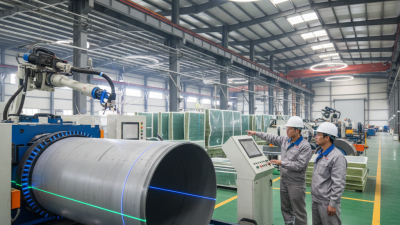
China’s top 10 spiral pipe manufacturers serve demanding projects in water transmission, piling, drainage, and industrial construction. Their strongest advantage is production scale. Many operate large forming lines, submerged arc welding systems, and automated inspection stations. This combination supports steady output and tighter dimensional control. Several manufacturers also provide different steel grades, wall thicknesses, diameters, and coating systems for varied site conditions.
One manufacturer group focuses on high-pressure water pipelines and emphasizes weld penetration, hydrostatic testing, and ultrasonic inspection. Another is stronger in large-diameter structural piles, where spiral weld consistency and impact resistance matter. Several suppliers specialize in internal epoxy linings, external polyethylene coatings, or cement mortar protection. Others offer faster custom production, useful when project drawings change late. Export-experienced manufacturers usually understand mill certificates, packing requirements, and container loading limits. That practical knowledge reduces avoidable delays.
Factory evaluation still requires caution. Some suppliers publish impressive equipment lists, but their inspection records may be less detailed. Check sample reports, welding procedures, coating thickness readings, and traceability documents before placing an order. A factory visit can reveal storage problems that photos hide. Not perfect.
Reliable manufacturers normally explain tolerances clearly and communicate production risks early. They should confirm steel origin, pipe length, flange details, test standards, and delivery terms in writing. Smaller producers may offer personal service, while larger plants often provide stronger capacity and technical support. The best choice depends on pressure class, soil conditions, corrosion exposure, and required delivery schedule. A low quotation alone proves very little.
China's Top 10 Spiral Pipe Manufacturers and Their Strengths
Technical benchmark for global buyers: minimum specified yield strength of commonly used API 5L line-pipe grades.
Higher yield strength supports demanding applications such as long-distance transmission, water infrastructure, and energy pipelines. The values shown are minimum specified yield-strength requirements for commonly referenced API 5L grade designations, not company-specific performance data.
How to Select the Right Chinese Spiral Pipe Supplier
Selecting a Chinese spiral pipe supplier requires more than comparing prices. A reliable manufacturer should explain steel grades, pipe dimensions, weld procedures, coating systems, and production capacity clearly. Ask for mill certificates, inspection records, and sample test reports. Confirm whether documents match the actual production batch. They should.
Check the supplier’s control process from raw material arrival to final loading. Important details include spiral weld inspection, hydrostatic testing, dimensional tolerance, coating thickness, and end protection. Request photos or videos showing these steps, but do not treat images as complete proof. An independent inspection can verify quantity, appearance, packing, and test results before shipment. This extra cost often prevents larger losses.
Tips: Compare at least three suppliers using the same technical specification. Review recent export experience and ask for verifiable project references. Confirm lead time, replacement terms, packaging, and communication responsibilities in writing. A professional supplier will question unclear requirements instead of accepting everything immediately. That is a good sign. Still, even careful buyers can overlook corrosion conditions or local installation practices. Recheck these points with an experienced engineer before placing the order.