Leave Your Message

China Top 10 Seamless Steel Tube Manufacturers?

China has a substantial seamless steel tube industry, serving energy, construction, machinery, and transportation markets. Yet choosing a manufacturer takes more than comparing catalogues or quoted prices. Buyers need to examine production capabilities, material traceability, inspection practices, delivery reliability, and experience with the required specifications. A polished website is not proof of consistent quality. Details count.

Metallurgist Cyril Stanley Smith wrote, “The history of metals is the history of civilization.” His observation offers a useful perspective: the value of a tube depends on how its material and manufacture perform in real service. For seamless steel tube buyers, that means asking practical questions. Can the supplier provide mill test documentation? Are dimensions and tolerances checked at defined stages? Can the company explain its heat treatment and nondestructive testing procedures? These checks help distinguish verifiable capability from broad marketing claims.

This guide introduces ten Chinese manufacturers and considers them through buyer-focused criteria, including product range, manufacturing resources, quality documentation, and export experience. It is not a universal ranking. Public information can be incomplete, and supplier performance may vary by product, facility, and order. That limitation matters. Use the list as a starting point, then confirm current certifications, production details, and sample documentation directly with each shortlisted supplier. A careful comparison can make sourcing clearer, though no article replaces a technical review of your application.
China Top 10 Seamless Steel Tube Manufacturers?

Define Seamless Steel Tubes by Manufacturing Process, Grades, and GB/T 8163

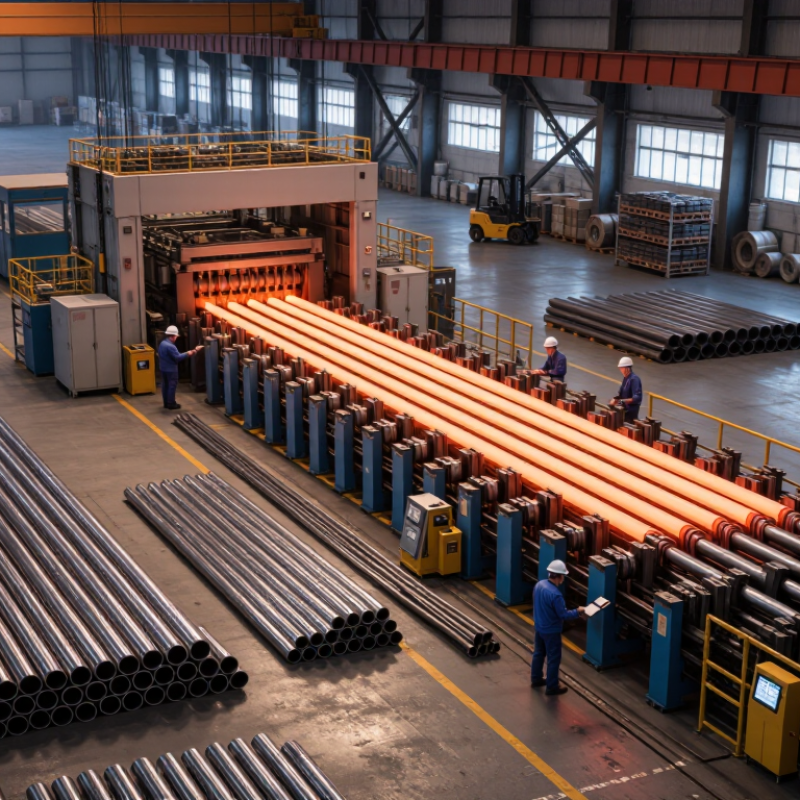
A seamless steel tube has no welded seam along its length. Manufacturers typically heat a solid billet, pierce it, and roll it into a hollow shell. Cold drawing can then refine the diameter, wall thickness, and surface finish. The process affects dimensional accuracy and mechanical properties, but “seamless” alone does not guarantee suitability for every service. Small differences in wall thickness matter during installation.

Grades describe material requirements, including chemical composition and mechanical performance. Under GB/T 8163, commonly specified grades include 10 and 20; buyers should check the applicable edition and product documentation. The standard covers seamless steel tubes for conveying fluids. It does not, by itself, confirm fitness for every pressure, temperature, or corrosive condition. A careful specification should state grade, outside diameter, wall thickness, length, delivery condition, and required inspection. Check the certificate against the ordered grade. Hydrostatic or nondestructive testing may depend on the standard, order, and agreed requirements. I would not treat the standard number as a complete specification; actual service conditions deserve a separate review.
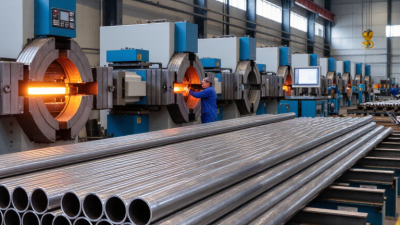
Profile China’s Top 10 Mills by Annual Capacity (t/y) and Product Range

A profile of China’s ten leading seamless steel tube mills should compare annual capacity in tonnes per year, not rely on plant size alone. Public capacity figures can describe installed lines, planned expansions, or actual production. Those measures are different. A careful ranking should state its reporting year and verify whether figures represent saleable output. Without that detail, even a precise t/y number can mislead.

Product range helps explain each mill’s position. Some producers focus on carbon-steel tubes for boilers, pipelines, and mechanical parts. Others offer alloy grades for higher temperatures or stainless tubes for demanding service conditions. Useful profile details include outside diameter, wall thickness, manufacturing route, heat-treatment options, and inspection capability. A wide catalogue sounds impressive, but buyers should check which sizes are routinely produced, rather than merely listed.

Capacity alone can mislead. Large annual output may favor standard sizes, while smaller batches require different scheduling and quality controls. Buyers should compare mill capacity with the actual grade, dimensions, and testing requirements in their specification. Ask whether the stated range reflects regular production or occasional orders. That distinction is easy to miss. It is also worth checking whether capacity data and product claims come from current, independently verifiable documents.

China Top 10 Seamless Steel Tube Manufacturers? - Profile China’s Top 10 Mills by Annual Capacity (t/y) and Product Range

The profiles below are anonymized, indicative industry estimates. Capacity figures are approximate nameplate ranges, not audited output; rankings may vary by source, facility scope, and operating conditions.

Indicative Rank Anonymous Mill Profile Estimated Annual Capacity (t/y) Representative Product Range Typical Applications
1 Large integrated seamless-tube complex 3,000,000–3,500,000 Carbon and alloy seamless tubes; casing, tubing, line pipe, boiler and mechanical tubes Oil and gas, power generation, construction and general engineering
2 Major alloy and OCTG-focused producer 1,800,000–2,500,000 Oil-country tubular goods, high-strength casing and tubing, alloy tubes and line pipe Oilfield drilling, well completion and energy infrastructure
3 Integrated northern-region tube mill 900,000–1,300,000 Carbon-steel seamless tubes, structural tubes, line pipe and selected casing grades Pipeline projects, mining, machinery and structural engineering
4 Large steel-group seamless-tube operation 800,000–1,200,000 Carbon and alloy tubes, boiler tubes, hydraulic tubes and general-purpose seamless pipe Boilers, petrochemicals, machinery and power equipment
5 Specialty tube producer with multiple rolling lines 600,000–900,000 Precision cold-drawn and hot-finished tubes, automotive tubes and bearing-quality tubes Automotive, bearings, hydraulic systems and precision machinery
6 Large-diameter and heavy-wall tube specialist 500,000–800,000 Heavy-wall seamless pipe, large-diameter tubes, pressure-service and structural grades Energy, chemical processing, shipbuilding and heavy equipment
7 OCTG and petroleum-pipe specialist 400,000–700,000 Casing, tubing, coupling stock and petroleum-industry seamless pipe Oil and gas wells, drilling services and energy projects
8 Regional seamless-pipe producer 350,000–600,000 Carbon-steel pipe, medium- and low-pressure boiler tubes, and mechanical tubes Boilers, machinery, construction and municipal infrastructure
9 Precision and cold-finished tube mill 250,000–450,000 Cold-drawn precision tubes, bright tubes, alloy tubes and high-dimensional-accuracy products Automotive components, cylinders and industrial hydraulics
10 Niche high-grade seamless-tube producer 200,000–400,000 Special-alloy, high-pressure boiler, heat-exchanger and corrosion-resistant seamless tubes Power plants, petrochemical facilities and demanding process industries

Note: Capacity ranges are broad estimates for comparison only. Actual available capacity and product specifications depend on mill configuration, product mix, maintenance schedules, and applicable standards.

Compare Product Coverage Under API 5L, ASTM A106, and EN 10216

A useful comparison of ten seamless steel tube manufacturers starts with standards, not ranking claims. API 5L covers line pipe for transporting fluids such as oil, gas, and water. Grade, product specification level, dimensions, and delivery condition affect suitability. Details matter.

ASTM A106 specifies seamless carbon steel pipe for high-temperature service. Its grades include A, B, and C, but a listing alone does not confirm every size or supply condition. EN 10216 covers seamless tubes for pressure purposes. Its parts address different steel types and temperature requirements. These standards are not interchangeable.

When comparing product coverage, ask for the exact grade, size range, and applicable standard edition. Review inspection documents and test results against the project specification. A certificate can clarify what was actually supplied, not just what a catalog claims. Check the paperwork. One limitation remains: public product lists may be incomplete, so confirm availability directly before treating coverage as proven.

Seamless Steel Pipe Standards: Primary Scope Comparison

This chart compares the stated scope of API 5L, ASTM A106/A106M, and the EN 10216 series—not manufacturer capabilities. A score of 1 indicates that the scope is explicitly covered by the standard; 0 means it is not the standard’s primary stated scope, not that a product is necessarily unsuitable for that use.

Scope references: API Specification 5L (line pipe); ASTM A106/A106M (seamless carbon steel pipe for high-temperature service); EN 10216 series (seamless steel tubes for pressure purposes, including elevated-temperature requirements in Part 2).

Benchmark ASTM A106 Grade B: 415 MPa Tensile Strength, 240 MPa Yield

ASTM A106 Grade B is a useful benchmark when comparing seamless steel tube manufacturers. Its specified minimum tensile strength is 415 MPa, while minimum yield strength is 240 MPa. These figures describe different behavior: tensile strength is the maximum stress before failure, and yield strength marks the onset of permanent deformation. Both matter in pressure-service applications.

A specification sheet is only a starting point. Buyers should check that the test certificate identifies the heat number, grade, dimensions, and applicable ASTM edition. Mechanical test results should match the ordered product, not simply a generic data table. Also review wall-thickness tolerances, inspection records, and any required hydrostatic or nondestructive testing. Requirements can vary by order.

The numbers are not the whole story. It is easy to overvalue a strong headline figure and overlook traceability or inconsistent documentation. A clear certificate and repeatable test results make comparisons more dependable. Ask how samples were tested, especially when elongation or other properties affect the application. Small details matter. A polished document can still leave questions unanswered, so verify the records before evaluating a supplier.

Assess Quality Controls, Export Markets, and End-Use Applications

When comparing China’s top seamless steel tube manufacturers, examine controls rather than relying on a product catalogue. Ask for heat-by-heat material traceability, chemical and mechanical test results, dimensional records, and documented non-destructive testing. For critical service, check how ultrasonic or eddy-current testing is applied, not merely whether it is listed. A tidy certificate pack is not proof by itself. Verify that the tested sample, production lot, and shipped tubes correspond.

Export capability also means consistent documentation, protective packing, and experience handling the dimensions and grades your project needs. The World Steel Association’s World Steel in Figures 2024 reports 1,892.2 million tonnes of crude steel production worldwide in 2023, including 1,019.1 million tonnes in China.

These figures describe crude steel, not seamless tube output, so they should not be used to rank tube suppliers. For end uses such as oil and gas, boilers, power plants, and mechanical equipment, match inspection requirements to operating pressure, temperature, and corrosion exposure.

One comparison often gets missed: a supplier may show strong test results, yet provide limited evidence of repeatability across batches. Ask for recent, traceable records. Then review them closely.