Leave Your Message

China Top 10 Seamless Steel Tube Manufacturers?

Choosing among China’s top 10 Seamless Steel Tube manufacturers requires more than comparing factory size or export volume. A polished website cannot reveal tube consistency. Buyers should examine manufacturing capacity, steel grades, heat treatment, dimensional control, and inspection records. Production details matter, especially when tubes must survive pressure, heat, corrosion, or repeated mechanical stress.

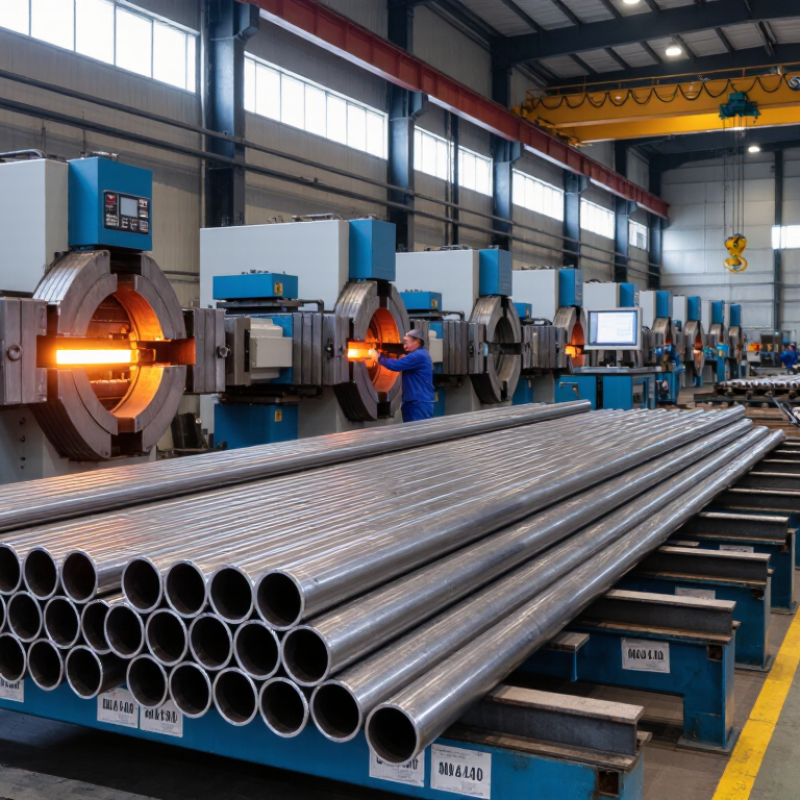
Edwin Basson, Director General of the World Steel Association, has described steel as “the backbone of modern society.” That view fits Seamless Steel Tube production closely. These tubes support oil and gas systems, boilers, power plants, construction equipment, and demanding engineering projects. Behind each tube are piercing mills, rolling stands, furnace controls, ultrasonic testing, and careful surface inspection. Small differences in wall thickness can affect installation and service life.

This guide compares ten notable Chinese manufacturers through practical criteria. These include product range, compliance with international standards, quality assurance, delivery capability, customization, and customer experience. Certifications help, but they do not tell the whole story. A buyer should also ask for mill test certificates, sample inspection data, traceability records, and recent project references.

The ranking is not absolute. Needs vary.

A refinery may value alloy grades. A machinery builder may prioritize tight tolerances. An overseas distributor may focus on packaging and stable lead times. Some manufacturers communicate technical details clearly; others leave important questions unanswered. That weakness deserves attention. Our comparison aims to make those differences easier to see, while recognizing that supplier performance can change with equipment, management, and market conditions.

China Top 10 Seamless Steel Tube Manufacturers?

What Are Seamless Steel Tubes and Where Are They Used?

Seamless steel tubes are hollow steel products made without a welded seam. A solid billet is heated, pierced, and rolled into a continuous tube. This structure helps the tube resist pressure, vibration, and uneven stress. In practical inspections, wall thickness, outside diameter, surface condition, and straightness deserve close attention. Small deviations can affect installation and service life.

These tubes are widely used in oil and gas pipelines, boilers, heat exchangers, and power plants. They also support hydraulic systems, structural frames, automotive parts, and heavy machinery. High-pressure equipment often needs tubes with dependable strength and controlled dimensions. For example, a boiler tube may face hot water, steam, and repeated temperature changes. A transport pipeline may require corrosion-resistant steel and strict testing records.

China has many seamless steel tube manufacturers serving domestic and international engineering projects. Reliable producers usually control billet quality, heat treatment, non-destructive testing, and traceability. Certifications can help, but paperwork alone does not prove consistent performance. Buyers should compare mechanical properties, applicable standards, inspection methods, and production experience. Material selection is not always simple. Engineers must consider pressure, temperature, fluid conditions, and installation loads together. A cheaper tube may create higher maintenance costs later, although this depends on the actual project.

How China’s Seamless Steel Tube Industry Has Developed

China Top 10 Seamless Steel Tube Manufacturers?

China’s seamless steel tube industry developed through scale, infrastructure demand, and process upgrades. The World Steel Association reported China produced about 1.019 billion tonnes of crude steel in 2023. That represented roughly 54% of global output. This large base supported investment in piercing mills, heat treatment, and automated inspection.

Development has not been perfectly smooth. Oversupply, uneven quality control, and volatile raw material prices still pressure manufacturers. The OECD’s recent steel market reports continue to highlight global excess capacity concerns. On a modern production line, heated billets pass through rotary piercing, elongation, sizing, and ultrasonic testing. These steps improve wall-thickness accuracy, but small defects can still appear near tube ends. Buyers should examine process records, not only catalog claims. National standards, including relevant GB/T specifications, normally define chemical composition, dimensions, and testing requirements.

Tips: Compare mill certificates with independent inspection results. Check tensile strength, hydrostatic testing, ultrasonic inspection, and heat-treatment records. Ask whether production follows the exact project standard. A low price may hide extra machining, shorter service life, or delayed documentation. China’s industry is more capable than it was a decade ago, yet capability differs widely between factories. That point is easy to overlook. Data from China’s National Bureau of Statistics and customs reports also show how strongly steel activity follows construction and export cycles, making demand forecasts uncertain.

China Top 10 Seamless Steel Tube Manufacturers? - How China’s Seamless Steel Tube Industry Has Developed

No. Industry Dimension Verified Industry Fact Typical Standard, Process or Period Industry Significance
1 Industrial Foundation China established the initial foundation of its modern steel industry after 1949, creating the basis for domestic production of seamless tubes and other industrial steel products. 1950s onward Reduced dependence on imported tubes for infrastructure, machinery and energy projects.
2 Production Expansion Economic reform and rapid industrialization increased demand for seamless tubes in power generation, petroleum, chemicals, construction machinery and transportation. Late 1970s–1990s The sector moved from basic supply toward larger-scale and more specialized production.
3 Main Manufacturing Route A conventional seamless-tube route includes round billet heating, rotary piercing, elongation or mandrel rolling, sizing, heat treatment, straightening, inspection and cutting. Hot-rolled seamless tube process Suitable for a broad range of carbon-steel and alloy-steel tube sizes.
4 Precision Manufacturing Cold drawing and cold rolling are used when customers require tighter dimensional tolerances, smoother surfaces and improved mechanical properties. Cold-drawn and cold-rolled tube Supports hydraulic, automotive, bearing, instrumentation and mechanical-engineering applications.
5 Structural and Mechanical Tubes Carbon and low-alloy seamless tubes are widely specified for structural members, shafts, machinery parts and general engineering purposes. GB/T 8162 Provides a commonly used Chinese specification for structural seamless steel tubes.
6 Fluid-Transport Tubes Seamless tubes for water, oil, gas and other fluid services are manufactured with requirements covering chemical composition, tensile properties, dimensions and pressure performance. GB/T 8163 Used in pipelines and equipment where reliable internal pressure performance is required.
7 Boiler and Heat-Exchanger Tubes The power industry uses carbon, alloy and stainless seamless tubes in boiler water walls, superheaters, reheaters, economizers and high-temperature heat-transfer equipment. GB/T 3087 and GB/T 5310 Higher-temperature and higher-pressure service has encouraged the development of alloy-steel tube capabilities.
8 Petroleum and Chemical Applications Refineries, petrochemical plants and chemical facilities require seamless tubes for cracking units, heat exchangers, high-pressure service and process piping. GB/T 9948 and GB/T 6479 Demand has shifted toward cleaner steelmaking, controlled heat treatment and stricter non-destructive testing.
9 Oilfield Tubular Products Oil and gas wells use seamless casing and tubing products designed for axial load, internal pressure, collapse resistance and connection performance. API Specification 5CT International oilfield requirements have encouraged domestic producers to improve traceability, testing and dimensional control.
10 Quality Control and Export Readiness Modern production commonly combines chemical analysis, tensile and hardness testing, dimensional inspection, hydrostatic testing and non-destructive testing such as ultrasonic or eddy-current inspection. ISO 9001-based quality systems; project-specific standards These controls help Chinese seamless-tube suppliers meet international project specifications without relying on brand-based evaluation.
Data scope: This table summarizes the development, standards, manufacturing routes and application segments of China’s seamless steel tube industry. It intentionally excludes company names, brand names, rankings and company-specific performance data.

China’s Top 10 Seamless Steel Tube Manufacturers

China’s Top 10 Seamless Steel Tube Manufacturers should be judged by evidence, not advertising. A credible ranking examines production capacity, export experience, and quality consistency. It also checks whether mills control each stage, from billet heating to piercing, rolling, and heat treatment. Reliable manufacturers can explain their process clearly.

During supplier evaluations, buyers should request mill certificates, inspection records, and sample test results. Useful checks include chemical analysis, tensile testing, hardness testing, ultrasonic inspection, and hydrostatic testing. Dimensional control matters too. A tube may meet strength requirements but still fail during installation if its wall thickness varies. Compliance with standards such as ASTM, ASME, EN, or API should match the project’s actual requirements. Paperwork alone is not enough.

Site audits provide stronger evidence. Look for calibrated instruments, traceable heat numbers, protected storage, and clear nonconforming-product procedures. Delivery performance deserves equal attention. A technically capable mill may still struggle with urgent schedules or custom sizes. That weakness is easy to overlook. I would also compare trial orders before approving large contracts. One polished factory visit cannot prove long-term consistency. Even a manufacturer with strong test data may need closer review when material grades, diameters, or surface finishes change. The most dependable choices combine engineering support, transparent communication, repeatable testing, and realistic production promises.

How to Compare Leading Chinese Steel Tube Manufacturers

Comparing China’s leading seamless steel tube manufacturers requires more than counting export volume. The World Steel Association reports that China produced about 1.005 billion tonnes of crude steel in 2024. That scale shows industrial capacity, not automatic tube quality. A serious comparison should examine billet chemistry, piercing control, heat treatment, and dimensional stability.

Request recent mill test certificates and match them with independent inspection results. Check compliance with GB/T, ASTM, EN, or API requirements for the intended service. Ask how ultrasonic testing covers each tube, not just a sample. Hydrostatic pressure records, calibration dates, and heat-number traceability deserve close attention. The ISO 9001 certificate helps, but it cannot replace process evidence. Site audits can reveal furnace layouts, storage discipline, and actual inspection routines.

Commercial performance matters too. Compare minimum order quantities, production lead times, packing methods, and claims handling. The World Bank’s Commodity Markets Outlook shows that steel prices can change sharply, so quotations need clear validity periods and adjustment terms. A low offer may hide thinner walls, weaker documentation, or expensive reinspection. No scorecard is perfect. Weight quality evidence more heavily than polished sales language, then test a small shipment before expanding the order.

How to Select the Right Seamless Steel Tube Supplier

How to Select the Right Seamless Steel Tube Supplier

Supplier selection starts with evidence, not polished brochures. The World Steel Association reported global crude steel production of about 1.89 billion tonnes in 2023. This huge capacity does not guarantee consistent seamless tube quality. Ask for mill certificates, heat numbers, chemical analysis, and mechanical test results. Each document should match the physical bundle and purchase order.

Check manufacturing capability against your application. For pressure service, review wall-thickness tolerance, hydrostatic testing, ultrasonic inspection, and applicable ASTM, ASME, EN, or API requirements. Request an EN 10204 3.1 certificate when traceability matters. A serious supplier can explain steel grades, piercing methods, heat treatment, and dimensional control without avoiding technical questions. Small details matter.

Delivery data deserves equal attention. The World Bank’s Commodity Markets Outlook shows that steel-related costs can shift with energy, raw materials, and freight conditions. Compare total landed cost, not only the tube price. Confirm minimum order quantities, packaging, port experience, and corrective-action procedures. Ask for recent inspection records.

Do not trust every impressive number. Verify it. A supplier may claim low defect rates without defining defects or sampling methods. That weakness is easy to miss. Independent pre-shipment inspection can expose ovality, surface seams, or incomplete documentation before loading. My practical preference is simple: test a small order first, then expand after performance is proven. Even this approach is imperfect, because one successful batch cannot predict every future heat.