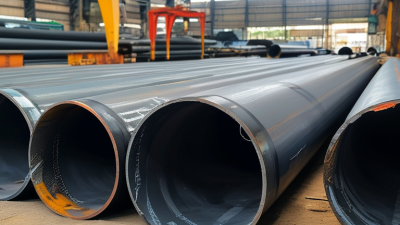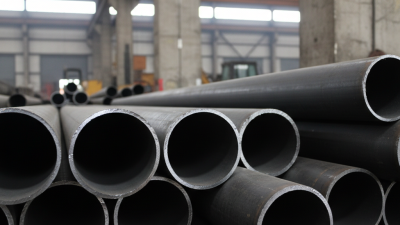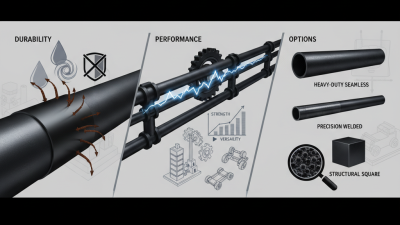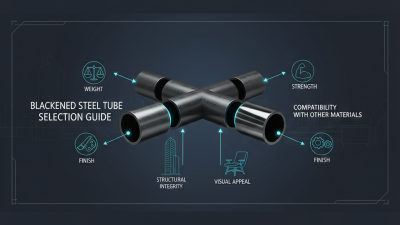
Choosing reliable Black Welded Pipe manufacturers requires more than comparing prices on a spreadsheet. Global buyers must examine steel grade, wall thickness, outside diameter, welding quality, dimensional tolerance, and production consistency. Black welded pipe usually has a dark mill finish and limited surface protection. It should not be confused with galvanized pipe. That distinction matters in water, construction, structural, and industrial applications.
“Pipe quality is measured long before it reaches the job site,” says Dr. Arun Mehta, a steel fabrication and welding specialist. His point is practical. A dependable manufacturer should control coil sourcing, forming pressure, weld monitoring, heat treatment, cutting, and final inspection. Buyers should request mill test certificates, batch traceability, inspection photographs, and clear information about applicable standards. ISO 9001 certification can support confidence, but certification alone does not prove every shipment is consistent.
Factory evidence matters more.
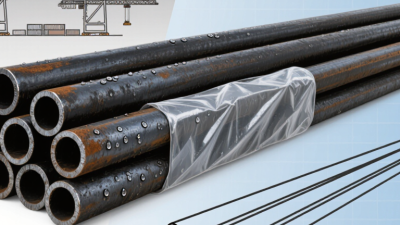
This guide reviews leading Black Welded Pipe manufacturers for global buyers, focusing on manufacturing capability, export experience, product range, documentation, and service reliability. It also considers details that are easy to overlook, such as bundle protection, thread accuracy, loading methods, and response time when specifications change. A low quotation may look attractive beside a port cost estimate. Later, rejected dimensions or incomplete documents can erase that saving. Even experienced buyers make this mistake. Therefore, the strongest supplier is not always the largest mill or the cheapest offer. It is the manufacturer that repeatedly delivers verifiable quality, communicates limitations honestly, and supports the pipe after production ends.
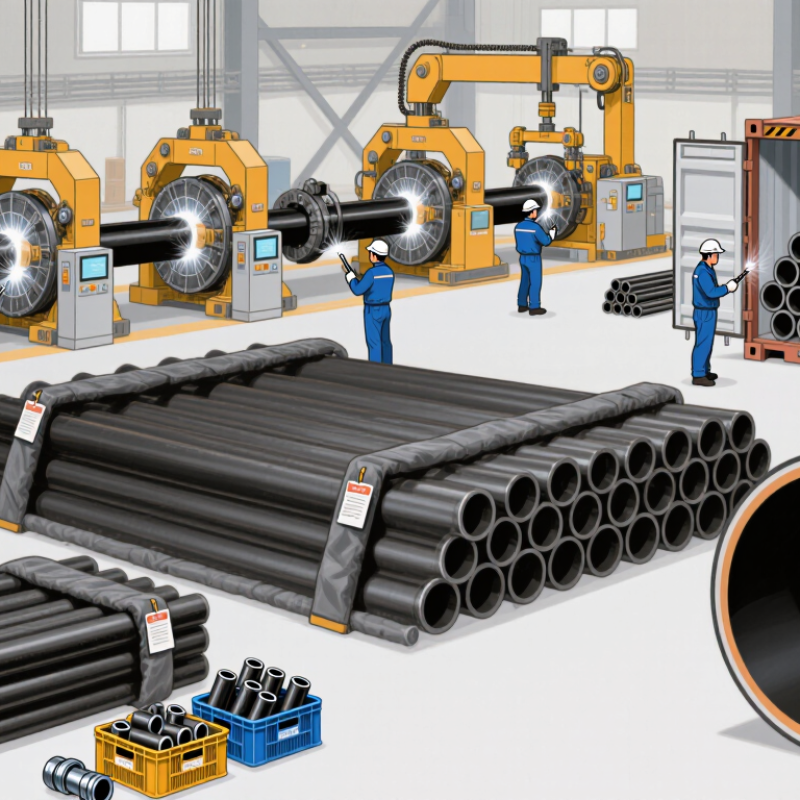
Black welded pipes are carbon-steel tubes made by forming flat steel strip and joining its edges with heat. Their dark surface usually comes from an oil finish or oxidation, not from a decorative coating. The welded seam runs along the pipe length and requires careful inspection. Manufacturers commonly produce these pipes in round sizes, with different wall thicknesses and steel grades. Surface condition matters. So does the internal weld quality.
Global buyers use black welded pipes in building frames, water lines, fire-protection systems, agricultural equipment, and industrial supports. They are also common in warehouses, fences, scaffolding, and low-pressure air or fluid applications. In construction, workers may cut, thread, weld, or connect them with fittings on site. Larger projects often require mill certificates, dimensional reports, and pressure-test records. These documents help buyers compare suppliers more reliably across borders.
Selection should match the working pressure, temperature, fluid, and local installation practice. A low quotation can look attractive, but it may hide thin walls, inconsistent dimensions, or weak packaging. That choice is often too simple. Buyers should confirm outside diameter, wall thickness, length tolerance, coating needs, and export packing before payment. Black pipe is not suitable for every environment, especially where corrosion exposure is severe. A protective coating may help, yet it adds preparation time and cost. Real projects rarely follow a perfect specification. Careful verification still prevents expensive surprises.
Top Black Welded Pipe Manufacturers for Global Buyers
How to Evaluate Leading Black Welded Pipe Manufacturers
Evaluating leading black welded pipe manufacturers requires more than comparing quoted prices. Start with product fit: outside diameter, wall thickness, steel grade, length tolerance, and end finish. Ask how the factory controls forming, welding, sizing, and straightening. A credible supplier should provide heat numbers, mill test certificates, and inspection records for each shipment. Confirm whether testing covers hydrostatic pressure, weld integrity, dimensions, and surface defects. Small gaps here can become expensive field problems.
Factory evidence matters. Request recent production photos, equipment lists, process flow, and capacity data tied to actual orders. If possible, arrange an independent audit or video inspection during production. Look for calibrated gauges, visible traceability tags, and separate storage for different steel grades. Check how rejected pipes are marked and handled. This detail often reveals more than a polished brochure. Delivery reliability also deserves proof, so compare promised lead times with completed shipping records.
Commercial evaluation should include packaging, loading methods, corrosion protection, and communication after dispatch. Clarify acceptable dimensional variation before signing technical documents. Review the supplier’s response to nonconforming material, including replacement timing and evidence requirements. Buyers often focus too heavily on unit price and underestimate port delays or reinspection costs. That approach needs reconsideration. No evaluation method is perfect. A lower quote is not always economical. Ask difficult questions early, record every answer, and test a sample batch when project risk is high.
Black welded pipe begins with carbon-steel coil, commonly selected for strength, formability, and cost control. The World Steel Association reported global crude-steel production of about 1.89 billion tonnes in 2023, showing the scale behind today’s pipe supply chains. Mills slit the coil, form it through progressive rollers, and weld the longitudinal seam using high-frequency electric resistance. Sizing follows. Cutting, end preparation, and surface cleaning create the familiar black finish, which usually means mill scale remains rather than a protective coating.
Material control starts before forming. Buyers should verify chemical composition, yield strength, tensile strength, and heat numbers against the purchase specification. ASTM A53 and API 5L requirements differ in scope, so treating them as interchangeable creates risk. Small details matter. A pipe may look uniform while containing inconsistent wall thickness. Mill certificates, calibrated gauges, and traceable batch records help expose that problem.
Quality programs normally combine visual checks, dimensional inspection, weld monitoring, and nondestructive testing. Eddy-current or ultrasonic examination can identify seam flaws that casual inspection misses. Hydrostatic testing adds evidence, but it cannot replace sound welding controls. The 2023 ISO Survey recorded more than one million ISO 9001 certificates worldwide, yet certification alone does not prove every pipe batch is reliable. Inspection plans still need independent review, sampling rules, and clear acceptance limits. Documentation is often the weak point. A perfect report cannot repair a poorly controlled process.
Key manufacturing processes, materials, and quality controls are commonly evaluated against internationally recognized carbon steel pipe specifications.
The chart compares the minimum specified yield and tensile strength values for widely used carbon steel pipe specifications. Black pipe generally refers to uncoated carbon steel pipe. Actual production controls may include steel chemistry verification, forming and welding control, dimensional inspection, weld integrity testing, hydrostatic testing, and heat or batch traceability.
Global buyers of black welded pipe need more than a competitive quotation. They need evidence that production, testing, and export procedures work together. The World Steel Association reported nearly 1.89 billion tonnes of crude steel production in 2023, showing the scale of this supply environment. Yet scale does not guarantee consistency.
International standards provide a practical screening point. Buyers commonly request ASTM A53, ASTM A106, or API 5L compliance, depending on pressure, construction, or line-pipe use. ISO 9001 certification indicates documented quality management, while ISO 14001 can support environmental due diligence. For each shipment, ask for mill test certificates, chemical analysis, tensile results, weld inspection records, and dimensional reports. Small gaps matter.
Export capability must be visible in daily details. Experienced manufacturers should explain coating options, bundle protection, container loading, HS classification, packing lists, and certificate legalization requirements. They should also manage independent inspections before dispatch. UN Comtrade trade statistics show the importance of cross-border steel flows, but customs data cannot verify pipe quality. That remains the buyer’s responsibility. A certificate may look complete and still hide weak sampling. I have seen this risk underestimated. Batch traceability, third-party testing, and clear claims procedures reduce that uncertainty, although they add time and cost. Reliable suppliers communicate delays early, preserve document consistency, and adapt markings to destination-country requirements. Availability alone is not export readiness.
Top Black Welded Pipe Manufacturers for Global Buyers
Global buyers compare black welded pipe suppliers through evidence, not attractive quotations alone. Start with pipe size, wall thickness, steel grade, length tolerance, and surface condition. Request recent mill test certificates, welding procedures, and batch traceability records. A reliable supplier should explain how each lot moves from coil storage to final inspection.
Ask for production photos, inspection checkpoints, and sample documents before placing an order. Compare lead times against actual capacity, not promises. Confirm packaging details, bundle weight, marking, loading methods, and port arrangements. Small differences matter when pipes arrive at a distant warehouse. Payment terms also deserve careful review. The cheapest offer may carry higher inspection, storage, or replacement risks.
Tips: Build a comparison sheet with price, tolerances, certificates, delivery time, and after-sales response. Request a pre-shipment inspection for larger orders. Check whether the supplier answers technical questions clearly. Vague replies are warning signs. Still, even careful buyers can miss details. I have seen specifications change between a quotation and a purchase order. Read every line twice. Ask for written confirmation of coating, quantity, and allowable tolerances. Keep approved drawings and inspection records together. This simple habit supports accountability when production problems appear.
| Anonymous Supplier Profile | Primary Production Region | Welding Process | Typical Outside Diameter | Typical Wall Thickness | Common Applicable Standards | Surface Finish | Typical Order Quantity | Indicative Production Lead Time | Quality Documents Normally Requested | Suitable Buyer Applications |
|---|---|---|---|---|---|---|---|---|---|---|
| Profile A: High-Volume Carbon Steel Mill | East Asia | High-frequency electric resistance welding | 21.3–610 mm | 1.6–20 mm | ASTM A53, ASTM A500, EN 10217-1, ISO 3183 | Black bare, galvanized, or externally coated | 25–100 metric tons | 25–45 calendar days | Mill test certificate, dimensional report, chemical analysis, mechanical test results | Water transmission, structural work, scaffolding, general fabrication |
| Profile B: Large-Diameter Spiral-Welded Producer | East Asia | Submerged arc welding with spiral forming | 406–3,660 mm | 6–25 mm | AWWA C200, API 5L, ISO 3183, EN 10217-1 | Black bare, epoxy-lined, or fusion-bonded epoxy coated | 100–1,000 metric tons | 35–60 calendar days | Weld inspection records, hydrostatic test report, coating report, traceability documents | Water pipelines, piling, irrigation, dredging, low-pressure fluid transport |
| Profile C: Structural Tube Specialist | South Asia | High-frequency electric resistance welding | 20–500 mm | 1.5–16 mm | ASTM A500, EN 10219, EN 10210, JIS G3466 | Black annealed, pickled, galvanized, or painted | 10–50 metric tons | 20–40 calendar days | Material certificate, weld quality report, coating thickness record, inspection checklist | Buildings, greenhouses, machinery frames, fencing, and construction supports |
| Profile D: Oil and Gas Line-Pipe Producer | Southeast Asia | Longitudinal submerged arc welding | 406–1,422 mm | 6.4–30 mm | API 5L, ISO 3183, ASTM A252, ASTM A671 | Black bare, three-layer polyethylene, or three-layer polypropylene | 100–500 metric tons | 40–75 calendar days | Heat traceability, non-destructive testing report, hydrostatic test report, certificate of conformity | Transmission lines, piling, infrastructure, and industrial fluid systems |
| Profile E: Galvanized Pipe Exporter | Middle East and South Asia | High-frequency electric resistance welding | 15–219 mm | 1.2–8 mm | ASTM A53, BS EN 10255, ISO 1461, ASTM A123 | Hot-dip galvanized, pre-galvanized, or black finish | 20–100 metric tons | 25–50 calendar days | Zinc coating test, dimensional inspection, material certificate, packing list | Fire sprinkler systems, handrails, water service, fencing, and mechanical installation |
| Profile F: Custom Small-Batch Manufacturer | Eastern Europe | Electric resistance welding and laser welding | 10–323.9 mm | 0.8–12.5 mm | EN 10217-1, EN 10219, ASTM A500, ISO 9001 quality systems | Black, pickled, oiled, powder coated, or galvanized | 5–25 metric tons | 15–35 calendar days | Inspection plan, material certificate, dimensional report, sample approval record | OEM parts, fabricated assemblies, furniture, automotive components, and maintenance orders |