Why Choose Fabricated Pipes for Your Next Project?
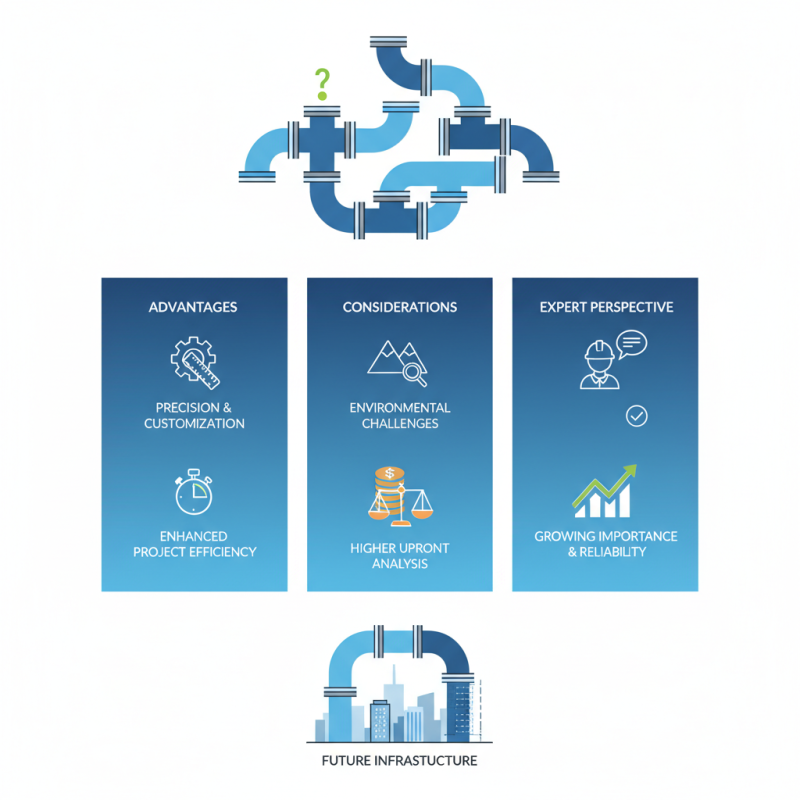
When considering materials for pipeline construction, "Fabricated Pipes" stand out as an optimal choice. Industry expert Mark Thompson, a leading engineer in pipeline design, states, “Fabricated Pipes offer unmatched precision and reliability for various projects.” This indicates their growing importance in today’s infrastructure.
Choosing fabricated pipes can lead to enhanced project efficiency. These pipes are customizable, allowing for specific dimensions and shapes that meet project needs. The fabrication process typically results in fewer joints, reducing the risk of leaks and failures in the long run. However, relying solely on fabricated pipes may overlook the unique challenges of specific environments, creating potential drawbacks.
Moreover, the upfront costs can be higher than traditional piping. It requires careful budgeting and planning. Stakeholders must evaluate whether the long-term benefits outweigh initial expenses. Thus, understanding the trade-offs involved is essential. Overall, while fabricated pipes present significant advantages, awareness of their limitations ensures a balanced approach to project planning.
Benefits of Fabricated Pipes in Construction Projects
Fabricated pipes are increasingly popular in construction projects. Their benefits are numerous and noteworthy. These pipes are custom-made to fit specific requirements. This leads to greater efficiency on the job site. Smaller projects can significantly reduce waste through precise fabrication. Field adjustments, which can be time-consuming, are often unnecessary.
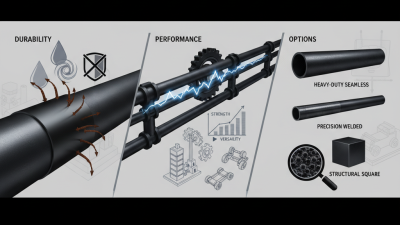
Moreover, fabricated pipes offer increased durability. These pipes are engineered to withstand various stresses and pressures. This means fewer replacements over time, saving costs in the long run. Additionally, they can be designed to handle specific environmental conditions, enhancing overall performance. Project managers can rely on their durability for critical infrastructure.
However, it's essential to consider that fabricated pipes may require a higher initial investment. This could be a barrier for some projects. Proper planning is necessary to ensure that the benefits outweigh the costs. A detailed evaluation of the project's needs and long-term goals is essential. Though they offer many advantages, they are not a one-size-fits-all solution.
Why Choose Fabricated Pipes for Your Next Project? - Benefits of Fabricated Pipes in Construction Projects
| Benefit |
Description |
Applications |
Cost Efficiency |
| Customization |
Fabricated pipes can be manufactured to specific dimensions and configurations required for a project. |
Oil and gas, construction, water supply systems |
Reduced overhead costs by minimizing waste in material. |
| Quality Assurance |
Controlled manufacturing processes lead to higher quality products that meet industry standards. |
Industrial facilities, chemical plants |
Consistency in quality can lead to long-term savings. |
| Time Efficiency |
Prefabrication reduces time on site, allowing for faster project completion. |
Infrastructure projects, commercial buildings |
Decreased labor costs due to shortened construction timelines. |
| Enhanced Durability |
Fabricated pipes can be designed to withstand harsh environmental conditions. |
Flood-prone areas, extreme temperatures |
Fewer replacements lead to lower long-term costs. |
| Reduced Lead Times |
Having prefabricated components ready can drastically decrease project lead times. |
Large-scale construction and renovation projects |
Helps in staying on schedule and within budget. |
Common Materials Used for Fabricated Pipes
When considering fabricated pipes for construction projects, material selection plays a critical role. Commonly used materials include stainless steel, carbon steel, and PVC. Each material has unique properties that cater to specific project requirements. Stainless steel is well-known for its high corrosion resistance. According to a report by the American Society for Testing and Materials (ASTM), stainless steel pipes can last decades, making them a sustainable choice.
Carbon steel is another popular option due to its strength and durability. It accounts for over 50% of the global pipe market, as per the International Pipe Industry Association (IPIA). However, carbon steel can be susceptible to rust without proper treatment. This gap raises concerns for long-term use. On the other hand, PVC pipes are lightweight and inexpensive. They resist corrosion and are ideal for drainage systems. However, they may not support high-pressure applications.
Understanding these materials' limitations aids in informed decision-making. A thorough analysis can enhance project efficiency and safety. Choosing the right fabricated pipe material can directly impact the longevity and functionality of the system.
Common Materials Used for Fabricated Pipes
Comparison Between Fabricated and Traditional Pipes
When considering pipe options for your next project, the choice between fabricated and traditional pipes is crucial. Fabricated pipes are typically designed specifically for unique applications. This customization can lead to improved efficiency and performance. On the other hand, traditional pipes often come in standard sizes and shapes, which may not suit all projects.
Durability is another important factor. Fabricated pipes can be made from materials that enhance strength and resistance to harsh conditions. Traditional pipes may not offer the same level of resilience. This can be a significant drawback in demanding environments. However, traditional pipes are often easier to source and can be more affordable. Cost savings might entice you, but one must reflect on potential long-term expenses associated with repairs and replacements.
Fabricated pipes can provide a tailored solution, but require careful planning. If specifications aren’t clearly defined, complications might arise. On the contrary, traditional pipes are straightforward but could lead to inefficiencies. Both options have their benefits and drawbacks. Ultimately, evaluating your project requirements thoroughly will guide you toward the right choice.
Applications of Fabricated Pipes in Various Industries
Fabricated pipes are becoming increasingly vital across various industries. Their adaptability and robustness make them suitable for applications in oil and gas, food processing, and construction. For example, according to a report by the American Society of Mechanical Engineers, fabricated pipes can withstand pressures up to 10,000 psi in certain conditions. This high-pressure capability is essential for safely transporting fluids in the oil and gas sector.
In the food industry, fabricated pipes support hygiene and efficiency. Stainless steel fabricated pipes are often used in dairy processing to prevent contamination. A study from the Food Engineering Magazine highlighted a trend where using fabricated pipes reduced cleaning times by 25%, thereby enhancing productivity. However, one must consider fabrication quality, as poorly manufactured pipes can lead to costly leaks and safety risks.
The construction sector also benefits from fabricated pipes, especially in HVAC systems. Custom-shaped pipes fit various architectural designs, improving energy efficiency. Still, there is a fine line between cost-saving measures and potential performance issues. A recent industry survey revealed that 30% of contractors reported failures due to inadequate collaboration with fabricators. This statistic underscores the importance of meticulous planning and communication.
Factors to Consider When Choosing Fabricated Pipes
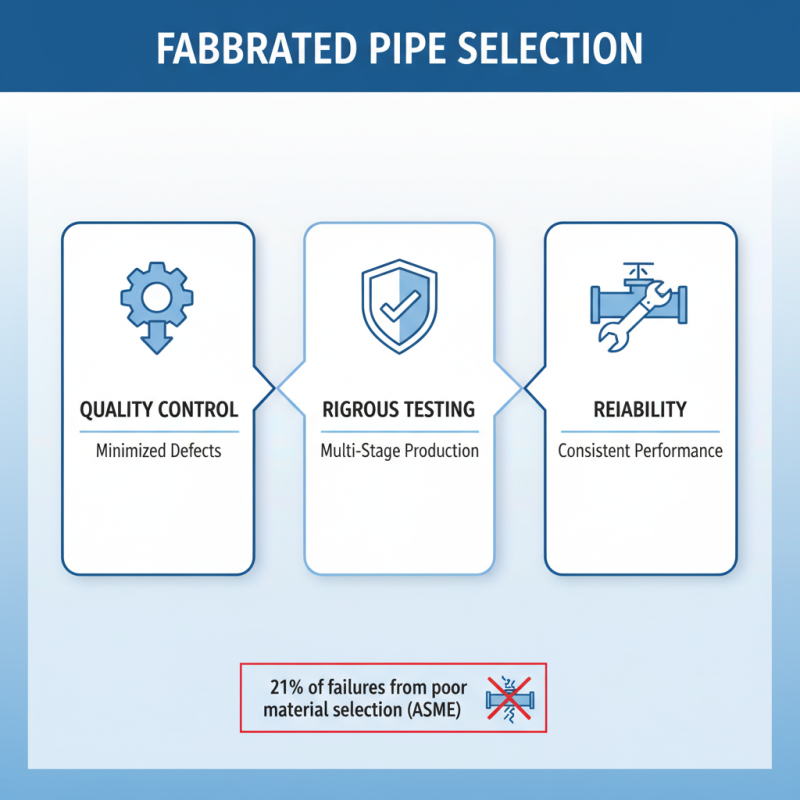
When choosing fabricated pipes for a project, several factors come into play. Quality is paramount. According to the American Society of Mechanical Engineers, 21% of failures in piping systems arise from poor material selection. Fabricated pipes often guarantee better quality control. They undergo rigorous testing at various stages of production. This significantly minimizes the likelihood of defects.
Cost is another crucial aspect. Studies indicate that fabricated pipes can reduce overall costs by up to 30% compared to traditional piping. This is especially important for large projects where budgets are tight. However, project managers must consider that the initial investment might be higher. The long-term benefits often outweigh this initial cost.
Additionally, delivery times are essential. Fabricated pipes typically have shorter lead times due to streamlined manufacturing processes. A report from the Pipe Fabrication Institute highlights that timely delivery can boost project timelines by 25%. Delays can lead to increased labor costs and potential penalties. Therefore, assessing the efficiency of the fabrication process is vital for project success.