Leave Your Message

Why Do Global Buyers Choose a Steel Stockist?

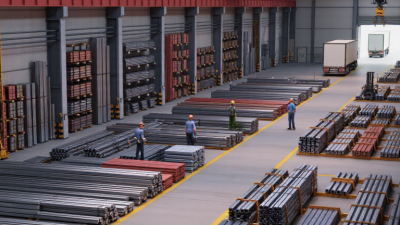
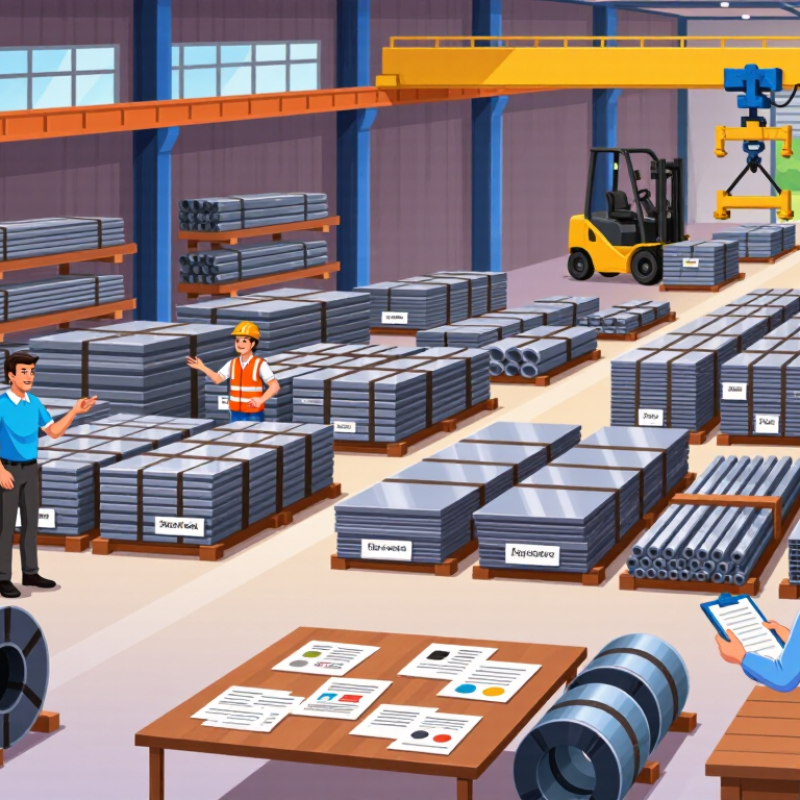
Why do global buyers choose a Steel Stockist when mills can supply steel directly? The answer often lies in practical details. A stockist may hold several grades, thicknesses, and finishes in one location. Buyers can compare options, request cut lengths, and coordinate deliveries without managing separate mill orders. For a fabricator facing a delayed project, that can mean fewer calls and less idle time beside an empty production line.

Edwin Basson, Director General of worldsteel, has emphasized steel’s essential role in modern life. That wider importance makes dependable sourcing more than a price question. Buyers also need material certificates, clear grade identification, consistent dimensions, and responsive service. A capable Steel Stockist can help provide these, while explaining what is in stock and what still needs confirmation. Details matter. A mismatched grade or late delivery can disrupt schedules and add cost.

Still, a stockist is not automatically the best choice. Buyers should check traceability, inspection documents, storage practices, and delivery terms before placing an order. Ask how stock is identified. Confirm whether processing affects lead time. Then compare the full landed cost, not only the quoted price. This takes effort, and sometimes the paperwork feels excessive. Yet skipping those checks can be a poor bargain. A reliable supplier makes the facts easy to review—and admits when an answer needs checking.
Why Do Global Buyers Choose a Steel Stockist?

Global Market Scale: 1,892 Mt of Crude Steel Produced in 2023 (worldsteel)

Global steel production reached 1,892 million tonnes in 2023, according to worldsteel. That enormous output supports construction, transport, energy, and manufacturing across many markets. Yet a global production figure does not tell a buyer which sizes are available nearby. Timing matters. A steel stockist can hold commonly requested sections, plates, or tubes closer to the project, helping buyers compare availability and plan deliveries. For a fabricator waiting on a specific beam size, that difference can affect workshop schedules and storage needs.

Tips: Confirm the grade, dimensions, quantity, and delivery date in writing. Ask whether material is in stock or still expected. Check any test documents relevant to your specification. Small checks help prevent costly mismatches.

The 1,892 Mt figure also reminds buyers that steel supply is vast, but unevenly distributed. Regional demand, transport capacity, and product mix all shape what can be sourced quickly. A stockist may offer useful flexibility, though not every requested item will be on the shelf. Buyers should compare lead times and verify details rather than assume scale guarantees supply. Even a careful plan can need adjustment when demand shifts.
Stockist Inventory: Faster Access Across a Complex Global Supply Chain

Why Do Global Buyers Choose a Steel Stockist?

Stockist Inventory: Faster Access Across a Complex Global Supply Chain

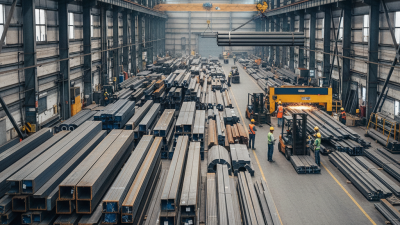
Steel buyers often face long mill schedules, changing vessel routes, and uncertain arrival dates. A stockist with regional inventory can offer another route: source approved grades already stored near the project, then arrange cutting and dispatch. UNCTAD’s Review of Maritime Transport 2024 notes that over 80% of international trade in goods by volume moves by sea. When shipping lanes are disrupted, nearby stock can reduce dependence on a single ocean shipment. It does not eliminate delays, but it can help keep fabrication moving.

The practical difference is visible on a busy shop floor: plates sized to a cutting list, or sections ready for collection, may arrive sooner than a new mill order. Buyers should confirm grade, dimensions, traceability documents, and actual available quantity—not just an online inventory listing. Stock can be allocated quickly, and then disappear. That detail is easy to overlook.

Tips: Ask for a dated stock check, material certificates, and a realistic dispatch window. Compare the full delivered cost, including processing and freight. Inventory helps most when specifications are clear; late changes can still slow everything down.

Grade Selection and Traceability Under ASTM, EN and JIS Standards

A steel stockist can help buyers compare grades across ASTM, EN, and JIS specifications. The names may look familiar, but similar strength values do not make grades interchangeable. Chemistry limits, heat treatment, impact requirements, and dimensional tolerances can differ. A useful selection starts with the component’s job: its load, service temperature, forming process, and welding needs. Details matter.

Traceability turns that selection into verifiable material. Buyers should be able to match each plate, coil, or pipe to its heat number and inspection documents. A mill test certificate typically records chemical composition and mechanical test results; the purchase specification determines what else is required. When stock is cut, markings and records need to stay connected to the remaining pieces. Keep the link intact.

A careful stockist checks the exact standard edition, grade designation, product form, and delivery condition before confirming an equivalent. It should flag gaps rather than quietly substitute a close match. One detail is easy to miss: a certificate can appear complete while omitting a buyer’s required impact test or supplementary condition. Ask for document review before dispatch, and confirm that labels, quantities, and reported test results match the order. Even good systems need a second look.

Why Global Buyers Choose a Steel Stockist

Minimum specified yield strength for selected structural steel grades (MPa)

For product thicknesses up to 16 mm, the cited minimum yield strengths are 250 MPa for ASTM A36/A36M, 235 MPa for EN 10025-2 S235JR, and 245 MPa for JIS G 3101 SS400. These grades are not automatically interchangeable; confirm the applicable standard edition, product dimensions, and delivery requirements.

A stockist can help verify grade selection and maintain heat- or lot-level traceability through the supplied inspection documents. Always check the governing standard and material certificate for the specific order.

Steel Circularity: 100% Recyclability and the Role of Scrap Supply (worldsteel)

Steel can be recycled repeatedly without losing its essential properties, supporting a more circular material economy. The phrase “100% recyclable” describes steel’s potential, not a guarantee that every beam returns to production. Collection, sorting, transport, and processing all matter. Clean manufacturing offcuts are easier to reuse than mixed scrap with coatings or attachments. Small details count. The label can sound simpler than the work. Steel stockists can consolidate orders and hold common sizes, helping buyers source material more efficiently. Any transport savings, however, depend on location and logistics.

Scrap supply is a vital part of steel circularity. Recovered material from buildings, vehicles, and factory offcuts can feed steelmaking, but availability varies by region and collection rates. Scrap is not automatically ready to melt. It must be sorted and assessed. A knowledgeable stockist can help buyers check grades, dimensions, and documentation before ordering. That reduces mismatches and avoidable returns. Still, stocked material alone does not make a purchase circular; buyers should also ask where it came from and how it moved through the supply chain.

Buyer Value: Managing Lead Times, Logistics and Procurement Risk

Why Do Global Buyers Choose a Steel Stockist?

For buyers, a steel stockist can reduce the gap between a production schedule and the arrival of usable material. Local inventory may shorten supply time, while consolidated loads can reduce partial shipments and repeated handling. This matters because UNCTAD’s Review of Maritime Transport 2024 reports that more than 80% of world trade by volume moves by sea. Port congestion or a missed vessel can disrupt even a carefully planned order. A stockist cannot remove that uncertainty, but can help coordinate dispatches and provide material certificates before shipment.

Procurement risk also depends on visibility. The World Bank’s 2023 Logistics Performance Index assesses customs, infrastructure, shipment tracking, logistics competence and delivery timeliness. Buyers can use these factors to assess supply routes, not just quoted prices. Ask whether available stock matches the required grade, dimensions and quantity, and confirm when inspection documents will be supplied. A nearby warehouse is useful. Yet stock can be reserved, misplaced or insufficient; I have seen plans depend on assumptions that were never confirmed in writing. Small checks matter.

Tips: Confirm stock in writing, agree on a dispatch window, and request tracking details and certificates before the truck leaves. Keep a modest time buffer. No buffer is perfect.

Why Do Global Buyers Choose a Steel Stockist? - Buyer Value: Managing Lead Times, Logistics and Procurement Risk

Buyer consideration How a stockist can help Useful measure or calculation Buyer action
Lead-time certainty May supply suitable material from available inventory instead of waiting for a new production slot. Quoted delivery lead time = order processing + preparation + transit time. Confirm each component and whether stock is physically available. Request an availability confirmation, dispatch date, and delivery estimate for the specified grade, size, and quantity.
Supply continuity Can offer an additional supply channel when a primary source is delayed or a project requirement changes. Coverage in days = usable on-hand quantity ÷ average daily demand. Set a reorder point using demand during replenishment lead time plus an agreed safety-stock allowance.
Procurement workload May consolidate compatible items into fewer purchase orders, deliveries, or supplier interactions. Compare the number of orders, delivery appointments, and invoices before and after consolidation. Check minimum order quantities, handling charges, and whether combined items can travel together.
Transport and handling Can coordinate collection, packing, and delivery options suited to the shipment and receiving site. Landed cost per tonne = (material cost + freight + handling + applicable duties and fees) ÷ delivered tonnes. Compare like-for-like quotes, including Incoterms, unloading responsibility, packaging, and access restrictions.
Specification and traceability Can help source material to a stated specification and provide available inspection and material documentation. Check grade, dimensions, applicable standard, heat or batch identification, and required certificate type against the purchase specification. Make documentation and marking requirements part of the order before shipment.
Processing and usable yield May provide cutting or other agreed processing, reducing in-house handling and offcut management. Material yield (%) = usable finished quantity ÷ purchased quantity × 100. Compare processed and unprocessed options, including tolerances, processing fees, and remaining scrap.
Price and inventory exposure Can support smaller or staged purchases where available, potentially limiting the quantity held at one time. Inventory value = quantity held × unit purchase cost; holding cost also depends on storage, financing, and handling. Balance delivery frequency and order size against freight, storage capacity, and production needs.
Contingency planning A second source may provide an alternative route to supply, subject to specification, stock, and capacity checks. Supplier concentration (%) = spend with one source ÷ total relevant spend × 100. Pre-qualify alternatives and confirm approval requirements before an urgent requirement arises.

Measures are procurement-planning tools, not guaranteed savings or delivery commitments. Availability, lead times, documentation, processing, and transport options depend on the material specification, location, order size, and current market conditions.