Top Trends in Fabricated Pipes for 2026 Global Buyers?
The global market for fabricated pipes is poised for significant growth by 2026. According to a recent report by MarketsandMarkets, the fabricated pipe market is expected to reach USD 10 billion, driven by innovations and demand across various industries. These pipes are essential for oil, gas, and construction sectors, providing durability and reliability.
As energy needs rise, the adoption of fabricated pipes will undoubtedly increase. Their lightweight nature and ease of installation provide advantages that traditional materials cannot match. Companies that understand these trends will gain a competitive edge. However, the rapid evolution also raises questions. Will manufacturers keep up with sustainable practices? Will advancements meet safety standards?
The dynamics of the fabricated pipes industry reflect broader challenges. Global supply chain disruptions and fluctuating material costs can hinder progress. Stakeholders must navigate these complexities to ensure long-term success. Understanding these trends is vital for investors and manufacturers alike as they strategize for the future.
Emerging Materials and Technologies in Fabricated Pipes by 2026
The market for fabricated pipes is rapidly evolving. Key trends suggest a shift towards innovative materials.
Fiber-reinforced polymers (FRP) are gaining attention due to their lightweight and corrosion-resistant properties.
These materials can significantly reduce the lifetime cost of pipelines. They're also flexible, allowing for easier installation in challenging environments.
Technological advancements are crucial in this transformation. 3D printing is emerging as a viable solution for customized pipe manufacturing.
This method reduces material waste and speeds up production timelines. However, 3D-printed pipes must meet stringent quality standards.
Research is ongoing to ensure their reliability in various applications.
Another trend is the integration of smart technologies.
Sensors embedded in pipes can monitor pressure and detect leaks in real time. While this enhances overall system reliability, the complexity of these systems raises concerns.
Training and maintenance will be critical to ensure effectiveness. Overall, the industry is on a promising yet challenging path.
Sustainability and Eco-Friendly Innovations in Pipe Production
As the demand for eco-friendly solutions grows, the pipe manufacturing industry is innovating. Sustainability is becoming crucial for producers. Techniques that reduce carbon footprints are on the rise. Recyclable materials find their way into more designs. This incorporation reflects a shift in priorities, emphasizing responsibility.
Manufacturers are experimenting with biodegradable materials, moving away from traditional plastics. These innovations offer potential relief for the environment. However, challenges remain. For instance, cost-effectiveness and performance standards need to align better with these new materials. Some companies struggle to balance profitability with sustainability.
Tips for buyers include researching suppliers' sustainability practices. Look for certifications that highlight eco-friendly efforts. Engage with companies to understand their production methods. The journey toward sustainability involves collaboration and transparency. Seeking out brands committed to eco-innovations can lead to better choices for the environment. The path toward green manufacturing is complex, with many hurdles still to overcome, but consumer demand can drive significant change.
Top Trends in Fabricated Pipes for 2026 Global Buyers
| Trend |
Description |
Expected Impact |
Key Materials |
| Biodegradable Pipes |
Pipes made from natural materials that decompose over time. |
Reduced plastic waste and improved environmental impact. |
Corn starch, PLA (Polylactic Acid) |
| Recycled Materials |
Utilization of recycled plastics and metals in pipe production. |
Lower carbon footprint and circular economy support. |
Recycled HDPE, PVC |
| Smart Pipes |
Pipes embedded with sensors for real-time monitoring. |
Enhanced maintenance and operational efficiency. |
Composite materials, electronic components |
| Modular Design |
Pipes designed in sections for easy installation and replacement. |
Reduced labor costs and faster project completion. |
Steel, thermoplastics |
| Energy-efficient Manufacturing |
Processes that minimize energy consumption in production. |
Lower operational costs and environmental benefits. |
Renewable energy sources, efficient machinery |
Applications of Fabricated Pipes Across Various Industries by 2026
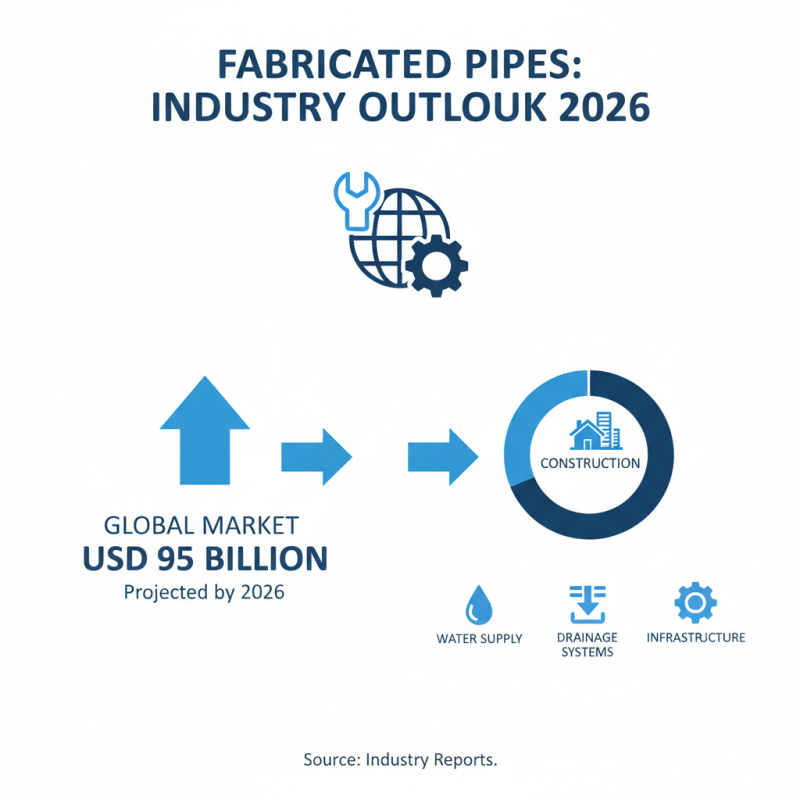
The use of fabricated pipes is expanding across various industries, driven by innovation and demand. In the construction sector, fabricated pipes are crucial for enhancing infrastructure. By 2026, the global market for fabricated pipes is projected to reach USD 95 billion, according to industry reports. These pipes are utilized for both residential and commercial projects, ensuring efficient water supply and drainage systems.
In the oil and gas industry, fabricated pipes play a vital role in transporting fluids. Data shows that around 30% of the market growth in this sector is attributed to rising energy demands. These pipes are designed to withstand harsh environments and high pressure. However, the process of ensuring quality control and compliance can be challenging, leading to potential reliability concerns.
Furthermore, the chemical processing industry increasingly depends on fabricated pipes for transporting corrosive materials. This application requires materials with high resistance to chemicals. The constant need for updated standards and innovations highlights the ongoing challenges in maintaining safety and performance. As industries evolve, adapting to new technologies becomes essential for addressing these concerns. The future landscape of fabricated pipes remains dynamic, with opportunities and hurdles in equal measure.
Global Supply Chain Dynamics Affecting Fabricated Pipe Availability
The global supply chain dynamics are reshaping the fabricated pipe market. As industries evolve, manufacturers face challenges with material sourcing and distribution networks. According to a recent industry report, over 70% of pipe manufacturers noted disruptions in their supply chains. These disruptions often lead to delays in project timelines and increased costs.
Moreover, geopolitical tensions and pandemic-induced policies have also created uncertainties. The International Pipe Association estimates that raw material costs could rise by 20% by 2026. This situation raises questions about sustainability in sourcing strategies. Companies need to assess their supply chains and build resilience against these fluctuations.
Buyers must adapt to these changes. Finding reliable suppliers who can deliver quality products remains crucial. It's essential to stay informed about market trends and potential shortages. Flexibility in sourcing and inventory management can provide a competitive edge. Industry leaders recommend diversifying supplier bases to mitigate risks.
Top Trends in Fabricated Pipes for 2026 Global Buyers
This chart illustrates the projected trends in the availability of fabricated pipes from 2024 to 2026. As global supply chain dynamics evolve, these factors will significantly influence the market.