Top Square Tube Suppliers for Your Global Projects?
When embarking on global projects, selecting the right suppliers is crucial. Square tubes are essential components in various construction and manufacturing applications. These versatile structures offer strength and stability, making them a preferred choice for many industries.
However, not all suppliers are equal. The right choice can greatly impact project outcomes. A reliable supplier should provide high-quality square tubes with consistent material properties. Their proven expertise is vital for ensuring your project runs smoothly.
Navigating the landscape of suppliers can be challenging. It’s essential to evaluate their experience, product range, and customer feedback. Even a respected supplier may not meet specific project needs. Challenges often arise, such as delivery delays or material shortages. Understanding these nuances is key to finding the best partner for your square tube needs.
Overview of Square Tubes and Their Applications in Global Projects
Square tubes are versatile components widely used in numerous global projects. Their strength and durability make them a preferred choice in construction, manufacturing, and transportation. Applications range from building frameworks to structural supports. The uniform shapes of square tubes allow for easy stacking and storage, optimizing space usage.
For those managing projects, understanding the specific requirements for square tubes is key. Check the material specifications carefully. Mild steel, stainless steel, and aluminum are common choices. Each material has unique attributes suited to different environments. Consider the project location and conditions when selecting the right type.
Tips: Always assess load-bearing needs before finalizing your choice. The wrong type could lead to failures in structure. Also, consult suppliers about custom sizes. This can make your project more efficient, saving time and costs. Review supplier reputations for quality assurance. A reliable supplier improves project outcomes and minimizes risks.
Criteria for Selecting Top Square Tube Suppliers
When selecting top square tube suppliers, various criteria come into play. Quality assurance is paramount. According to a recent industry report, over 70% of project delays stem from poor material quality. Suppliers should adhere to recognized standards, ensuring durability and reliability in production.
Lead times are another critical factor. A delay of just a few days can result in significant cost overruns. Industry data indicates that efficient suppliers provide lead times averaging under two weeks. This efficiency is often tied to robust supply chain management practices. Suppliers with transparent logistics systems should rank higher in your evaluation.
Lastly, consider the supplier's customer support and industry experience. A company with over a decade of experience generally demonstrates a deeper understanding of market dynamics. However, even experienced suppliers can face challenges. Regular audits and feedback loops should be part of your review process to identify areas for improvement. Supplier reliability can sometimes be overstated, so prioritizing a collaborative approach is essential for long-term partnerships.
Top Square Tube Suppliers for Your Global Projects
| Supplier Location |
Quality Standards |
Minimum Order Quantity |
Average Lead Time |
Available Certifications |
Customer Support |
| North America |
ISO 9001, ASTM |
500 units |
4-6 weeks |
ISO 14001, CE |
24/7 Availability |
| Europe |
EN 10130, EN 10219 |
1000 units |
3-5 weeks |
ISO 50001 |
Business Hours Support |
| Asia |
JIS G3466, JIS G3101 |
2000 units |
6-8 weeks |
ISO 9001 |
Response within 24 hours |
| Australia |
AS/NZS 4260 |
1500 units |
5-7 weeks |
ISO 14001 |
Email and Phone Support |
List of Leading Square Tube Suppliers Worldwide
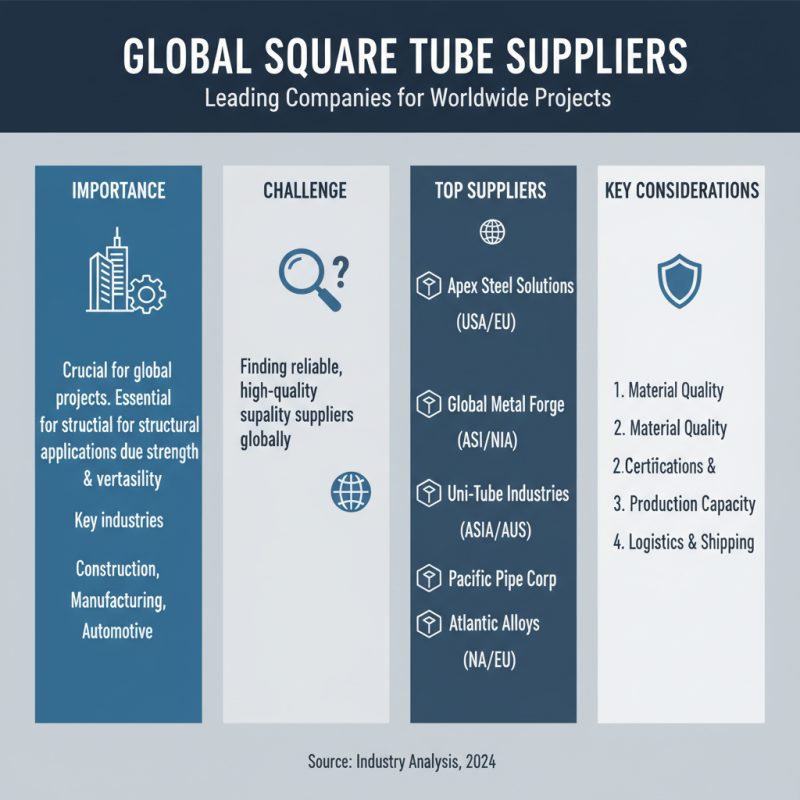
When embarking on global projects, sourcing high-quality materials is crucial. Square tubes are a staple in various industries, including construction, manufacturing, and automotive. Their strength and versatility make them essential for structural applications. However, finding reliable square tube suppliers can be challenging.
Several leading suppliers stand out in the square tube market. These providers specialize in different materials, such as steel and aluminum, catering to diverse project needs. Each supplier has unique strengths, with some focusing on custom solutions. It's important to evaluate their quality assurance processes and customer feedback to ensure they meet your standards.
While many suppliers claim expertise, not all deliver consistent quality. Discrepancies in supply or fabrication can lead to project delays. Thus, conducting thorough research is vital. Look for suppliers with a proven track record and transparency in their operations. This due diligence will help you select partners that align with your project goals, reducing the risk of potential setbacks.
Evaluation of Supplier Quality and Service Standards
When evaluating square tube suppliers, quality and service standards play a critical role. Industry data shows that 80% of project delays stem from supply chain issues. Suppliers must consistently deliver products that meet rigorous quality specifications. Understanding material certifications, alloy compositions, and manufacturing processes is essential. Reports indicate that companies taking supplier audits witness a 30% decline in quality-related issues.
The service level of a supplier impacts project success. Fast response times can mitigate risks associated with unforeseen challenges. Communication and reliability should not be overlooked. According to a recent survey, 75% of professionals rate a supplier’s customer service as a deciding factor in future contracts. However, it is essential to assess if a supplier can adapt to evolving project demands.
While some suppliers boast excellent quality records, there can be hidden weaknesses. Not all certifications translate into real-world reliability. Conducting due diligence and checking references is vital. Suppliers should not promise unrealistic timelines or prices without understanding the project scope. Misalignment can lead to costly mistakes. Prioritizing quality and service is paramount for ensuring project efficiency and success.
Supplier Quality and Service Standards Evaluation