Choosing the right Combi Walls system is a practical decision, not a simple product comparison. Global buyers must balance structural strength, installation speed, steel quality, corrosion resistance, and total project cost. These factors matter on waterfront developments, bridge foundations, quay walls, and temporary excavation projects.
This guide examines ten leading Combi Walls options for international purchasing teams. Each selection considers section design, pipe or king pile compatibility, interlock performance, coating choices, and available technical documentation. We also review supplier experience, production consistency, testing records, delivery capability, and after-sales support. A reputable manufacturer should provide mill certificates, dimensional data, welding details, and clear load information. Site conditions still decide everything.
Details matter.
Soft marine soil may require deeper penetration and stronger bracing. Aggressive water can shorten service life without suitable protection. Some systems look economical at the quotation stage, yet handling, splicing, transport, and installation may increase the final budget. Buyers should request project references from comparable climates and construction conditions. Local engineering review remains essential, especially when seismic forces, tidal movement, or nearby structures are involved.
There is no universal “best” wall. Rankings can change when freight distance, steel prices, or local installation skills change. Supplier websites may also present incomplete performance data, so independent verification is wise. This overview offers a reliable starting point, but it cannot replace project-specific calculations. A careful buyer will question attractive claims, compare like-for-like specifications, and confirm compliance with applicable standards before placing an order. Mistakes are expensive. Better questions prevent them.
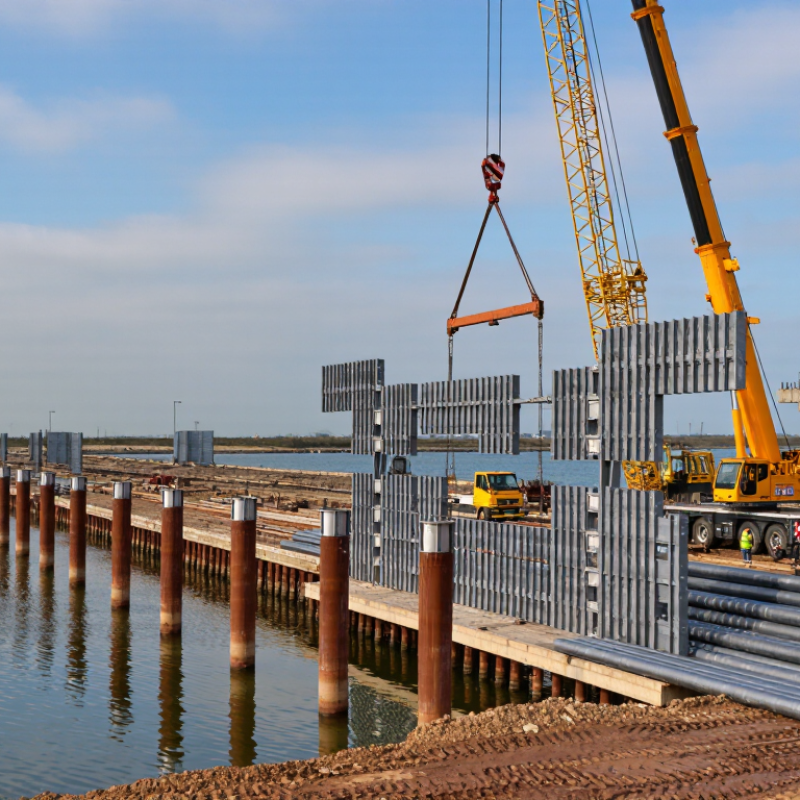
A combi wall is a deep retaining system made from large king piles and smaller sheet piles. The king piles carry most of the bending forces. Sheet piles connect them and close the wall face. Together, they resist soil pressure, water pressure, and construction loads.
Installation usually begins with guide frames that control pile spacing. Crews drive or vibrate the king piles into the ground, then install sheet piles between them. Interlocks help the sections act as one continuous barrier. A reinforced concrete capping beam can connect the pile heads. Tie rods, ground anchors, or internal struts may support the wall when excavation becomes deeper.
The system is common near ports, rivers, road cuts, and basement excavations. It suits projects requiring high stiffness or reduced wall movement. However, it is not automatically the best solution. Soil layers, groundwater levels, driving restrictions, and corrosion exposure must guide the design. A geotechnical engineer should check bending capacity, embedment depth, seepage, and nearby structures.
Small details matter.
On real sites, alignment is rarely perfect. Hard layers can deflect piles, while loose fill may increase vibration. I have seen installation plans look efficient until access became limited. That experience makes sequence planning essential. Buyers should request steel grades, section dimensions, tolerances, protective treatment, and test documentation. Clear delivery lengths also prevent costly cutting work on site.
10 Best Combi Walls for Global Buyers
Key Factors Global Buyers Should Compare
Choosing among the 10 best combi walls requires more than comparing surface colors and quoted prices. Buyers should check panel thickness, core density, moisture resistance, and joint design. A wall may look solid in a showroom but flex around a poorly supported valve. Ask for test reports covering water absorption, impact strength, mold resistance, and fire performance. Requirements differ by country, so recognized standards and clear installation instructions matter.
Cleanability deserves serious attention. The WHO and UNICEF Joint Monitoring Programme reported that 3.5 billion people lacked safely managed sanitation in 2022. That figure highlights the importance of hygienic, maintainable bathroom surfaces, especially in high-use housing and hospitality projects. Compare non-porous finishes, sealed edges, replacement access, and the number of visible seams. Fewer seams usually mean fewer places for residue to collect. Not always, though.
Environmental data should influence the purchase. UNEP’s 2023 Global Status Report for Buildings and Construction stated that buildings produced 37% of global energy and process-related carbon emissions in 2022. Buyers should request recycled-content percentages, product lifespan estimates, packaging details, and end-of-life guidance. Lightweight panels can reduce transport emissions, but thin materials may require earlier replacement. That trade-off is easy to overlook. Confirm local installer experience, spare-part availability, lead times, warranty conditions, and currency-adjusted landed cost before approving a large order. A low factory price can become expensive after freight, damage, and rework.
| Rank | Combi-Wall Configuration | Typical King Pile Size | Typical Sheet Pile Infill | Typical Steel Grade | Approximate Structural Range | Best Suited For | Main Advantages | Key Limitations | Standards and Design Checks |
|---|---|---|---|---|---|---|---|---|---|
| 1 | Large tubular pipe king piles with double sheet-pile infill | Outside diameter: 1,016–1,524 mm Wall thickness: 16–25 mm |
Two sheet piles between adjacent king piles; effective panel width commonly 1.2–1.6 m | Yield strength commonly 355–420 MPa | High bending stiffness and high axial capacity; section modulus selected by the project engineer | Deep marine quay walls, heavy berths, and high surcharge loads | Excellent bending resistance, strong load transfer, and good suitability for deep water structures | Higher steel weight, larger lifting equipment, and greater transport cost | Check EN 1993-5 or the applicable national steel-pile design standard, including buckling, corrosion loss, and connection forces |
| 2 | Medium tubular king piles with standard hot-rolled sheet-pile infill | Outside diameter: 711–1,016 mm Wall thickness: 12–20 mm |
Commonly one or two sheet piles between king piles; panel width about 0.8–1.4 m | Yield strength commonly 355 MPa | Medium-to-high flexural capacity for general permanent retaining structures | Commercial waterfronts, river walls, and general port infrastructure | Balanced cost, stiffness, installation speed, and availability of standard components | May require internal bracing or anchors where excavation depth and surcharge are high | Review wall stability, anchor loads, interlock resistance, weld details, and construction-stage load cases |
| 3 | Large tubular king piles with high-strength sheet-pile infill | Outside diameter: 914–1,320 mm Wall thickness: 14–22 mm |
Double sheet-pile infill using heavier sections for increased bending and axial resistance | King piles commonly 355–420 MPa; infill commonly 355 MPa | High structural capacity with reduced steel thickness compared with an all-heavy conventional wall | Projects requiring high capacity while controlling overall steel tonnage | Improved strength-to-weight ratio and efficient use of high-strength structural steel | Higher material cost and stricter welding, inspection, and fabrication requirements | Confirm weldability, toughness requirements, fatigue category, and compatibility of steel grades |
| 4 | Wide-panel combi wall with closely spaced tubular king piles | Outside diameter: 610–914 mm Wall thickness: 12–20 mm |
Three or more sheet piles between king piles; panel width commonly 1.5–2.4 m | Yield strength commonly 355 MPa | Moderate-to-high wall stiffness with a relatively wide modular panel | Long waterfront alignments where installation productivity is important | Fewer king piles per metre of wall and efficient production for repetitive layouts | More sheet-pile interlocks per panel and greater sensitivity to alignment tolerances | Check panel distortion, interlock continuity, drivability, and differential movement between pile types |
| 5 | Compact combi wall with smaller tubular king piles | Outside diameter: 508–711 mm Wall thickness: 10–16 mm |
One or two lighter sheet piles between king piles; panel width about 0.7–1.2 m | Yield strength commonly 275–355 MPa | Low-to-medium structural capacity for moderate retained heights | Small riverbanks, temporary works, low quay walls, and restricted-access sites | Lower installation energy, easier handling, and reduced transport requirements | Limited capacity for large vessel berthing loads, deep excavation, or heavy surcharges | Assess temporary and permanent load cases separately, including local buckling and installation stresses |
| 6 | Anchored combi wall with tie rods and a land-side anchor system | Outside diameter: 711–1,220 mm Wall thickness: 14–22 mm |
One or two sheet piles between king piles, selected for soil retention and interlock continuity | Yield strength commonly 355 MPa | High retained-height capability when tie level, anchor spacing, and soil conditions are suitable | Deep excavations, port terminals, and quay walls with limited wall deflection tolerance | Reduces bending demand in the wall and can provide a cost-effective permanent solution | Requires land-side space, reliable anchorage, corrosion protection, and careful construction sequencing | Check global stability, tie-rod capacity, anchor block or pile-group resistance, and serviceability deflection |
| 7 | Unanchored cantilever combi wall | Outside diameter: 610–1,016 mm Wall thickness: 12–20 mm |
Sheet-pile infill selected to maintain soil and water cut-off between king piles | Yield strength commonly 355 MPa | Moderate retained-height capability, governed strongly by embedment depth and soil parameters | Temporary cofferdams, shallow water-retaining walls, and sites without anchor access | Simple layout, no permanent tie system, and fewer land-side construction interfaces | Greater bending demand, larger embedment requirements, and higher sensitivity to scour and excavation depth | Check rotational stability, passive resistance, hydraulic gradients, scour level, and construction-stage excavation |
| 8 | Corrosion-protected combi wall for aggressive marine exposure | Outside diameter: 711–1,220 mm Wall thickness: 16–25 mm, including design corrosion allowance where applicable |
Coated or corrosion-designed sheet piles with sealed or treated interlocks where specified | Yield strength commonly 355 MPa; higher grades may be used subject to specification | Structural capacity determined after applying the project corrosion model and design life | Tidal zones, splash zones, industrial waterfronts, and saline or contaminated environments | Longer service life through coating systems, corrosion allowance, cathodic protection, or combinations thereof | Higher initial cost and ongoing inspection or maintenance obligations | Use site-specific corrosion rates, coating compatibility requirements, cathodic-protection criteria, and inspection intervals |
| 9 | Low-vibration combi wall using press-in or low-impact installation | Outside diameter: 508–914 mm Wall thickness: 12–20 mm |
Light-to-medium sheet piles compatible with the selected installation sequence | Yield strength commonly 355 MPa | Capacity depends on soil resistance, equipment reaction force, and allowable installation tolerances | Urban waterfronts, projects near sensitive buildings, utilities, railways, or operating facilities | Reduced ground vibration and noise compared with conventional impact driving | Slower production in hard ground and possible need for predrilling or temporary reaction frames | Confirm installation feasibility through geotechnical investigation, trial panels, refusal criteria, and monitoring plans |
| 10 | Reusable temporary combi wall with bolted or recoverable connection details | Outside diameter: 610–1,016 mm Wall thickness: 12–20 mm |
Standard sheet-pile infill selected for repeated handling and acceptable residual deformation | Yield strength commonly 355 MPa | Medium structural capacity with design allowances for lifting, driving, extraction, and reuse | Temporary cofferdams, construction platforms, bridge works, and staged marine construction | Potentially lower whole-life cost through recovery and reuse of major steel components | Extraction may be difficult in dense soils; damage and permanent deformation must be inspected before reuse | Design for installation and removal loads, lifting points, residual stresses, interlock damage, and reuse inspection criteria |

| The dimensions and performance ranges shown are representative values for commonly used steel combi-wall systems, not product-specific guarantees. Final selection should be based on project geotechnical data, water levels, retained height, surcharge, berthing or mooring loads, seismic conditions, corrosion exposure, installation method, design life, and applicable local standards. | |||||||||
The best combi wall depends on the project, not a ranking alone. For deep excavation, a steel H-pile and sheet-pile wall offers high bending resistance and dependable soil retention. A tubular-pile and sheet-pile system suits waterfront works where wave loads and greater stiffness matter. For tight urban sites, a compact pipe-pile combi wall can limit excavation width and protect nearby foundations. It is not always the cheapest option.
For temporary construction, a lighter king-pile and sheet-pile arrangement supports fast installation and possible removal. A heavier king-pile system works better for permanent quay walls carrying cranes, vehicles, and stored materials. Where groundwater pressure is high, interlocked sheets with a properly designed sealing system can reduce inflow. For soft clay, a large-diameter tubular combi wall provides useful stiffness, but settlement calculations remain essential. Designers should also check driving vibration near hospitals, railways, and older masonry.
For projects requiring reuse, durable steel sections and accessible connections make inspection simpler. In contaminated soil, protective coatings and controlled handling can reduce maintenance concerns. For limited headroom, shorter modular sections may solve access problems, although they can require more joints. One field lesson is easy to overlook: installation tolerances often control performance more than brochure capacity. Surveying, trial driving, and monitoring should guide adjustments. I have seen plans fail through rushed assumptions. Soil data can be incomplete. Independent review, verified calculations, and site observations give each combi wall a more reliable fit.
The chart compares ten common project requirements using an indicative engineering-planning index from 1 to 10. Higher values represent a stronger suitability for a combi-wall solution in that application. Final wall configuration, pile spacing, steel grade, corrosion allowance, anchoring system, and embedment depth must be verified through project-specific geotechnical and structural design.
The ten best combi walls should meet recognized structural, fire, moisture, and acoustic requirements. Look for test reports, material declarations, and traceable quality records. Standards differ between regions, so one certificate rarely satisfies every market. Check local building codes before placing a large order. Small details matter.
For overseas shipping, confirm panel dimensions, gross weight, pallet strength, and container loading plans. Moisture-resistant packaging protects edges during long ocean journeys. Ask for spare profiles and fasteners, because replacements may take weeks. Clear Incoterms and customs documents can prevent unexpected port charges. Shipping is part of design.
Installation depends on the existing substrate, climate, and available tools. Uneven floors may require leveling compounds before wall panels are fitted. In humid areas, installers should verify joints, seals, and ventilation paths carefully. Follow the supplied drawings, but review them with a local professional. Generic instructions can miss regional conditions. That happens.
A practical mistake is judging quality from appearance alone. A smooth surface may still hide weak joints or poor thermal performance. Request sample sections, installation videos, and independent test evidence. It is also wise to inspect one completed room before scaling the project. The “best” option is not always the cheapest or lightest.
Selecting among the 10 best combi wall suppliers requires more than comparing steel prices. A reliable supplier should explain the wall system, design loads, soil conditions, corrosion allowance, and installation method. Ask for proof. Request mill certificates, welding records, dimensional inspection reports, and independent quality-control results. ISO 9001 certification helps, but it does not replace project-specific evidence.
UNCTAD’s Review of Maritime Transport 2024 reported about 12.3 billion tonnes of seaborne trade in 2023. This scale keeps ports under pressure and makes delivery reliability critical. Check production capacity, shipping experience, packing methods, and contingency plans. The World Bank’s Logistics Performance Index 2023 also highlights infrastructure, tracking, and timeliness as important logistics measures. A strong supplier should provide realistic milestones, not optimistic promises. Details matter.
Technical support can separate a suitable supplier from a cheap one. Review design calculations against applicable standards, including steel grade, section tolerances, interlock performance, and corrosion protection. Ask whether engineers will support installation problems at the quay, not only before the contract. I have seen buyers focus heavily on unit cost and overlook piling equipment compatibility. That mistake can increase project costs quickly. References should include comparable water depth, soil conditions, and wall length. If a supplier avoids difficult questions, pause. No supplier is perfect, and even experienced teams can underestimate ground variability. Use independent verification for critical calculations and keep every approval traceable.