What is Seamless Steel Tube and Why is it Essential for Buyers?
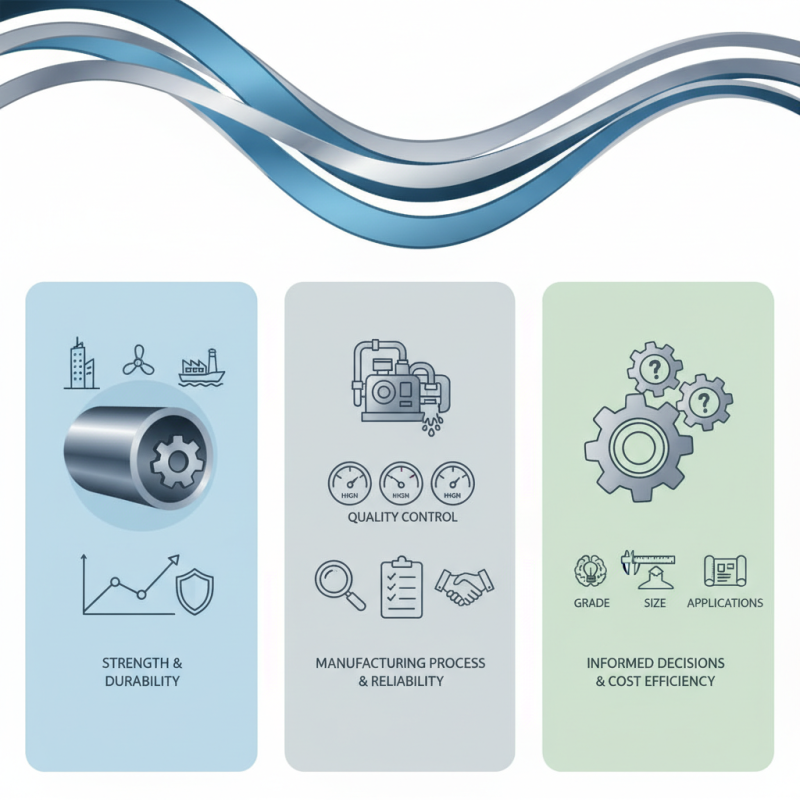
Seamless steel tubes have become a critical component across various industries. This is due to their unique properties and structural advantages. Renowned industry expert, Dr. Emily Chen, highlights, “Seamless steel tubes offer unmatched strength and durability, making them vital for engineering applications.” Her insights reflect the material's versatility.
The production process of seamless steel tubes involves precise techniques. This ensures consistency and reliability in performance. Manufacturers focus on stringent quality controls to meet standards. However, not all products are created equal. Buyers must conduct due diligence when selecting suppliers.
Understanding the significance of seamless steel tubes can be complex. It's essential to consider factors like grade, size, and specific applications. Buyers may overlook these details, leading to costly mistakes. Thus, investing time in research is pivotal for making informed decisions.
What is Seamless Steel Tube?
Seamless steel tubes are cylindrical pipes crafted from high-quality steel. They are produced without seams or welding, which contributes to their strength and durability. This makes them an excellent choice for high-pressure applications. Industries like oil and gas, automotive, and construction frequently depend on these tubes. Their seamless nature reduces the risk of leaks and fractures, ensuring safety and efficiency.
These tubes come in various sizes and specifications. This flexibility meets different requirements across multiple sectors. Despite their reliability, it’s crucial for buyers to choose the right ones. Not all seamless tubes are created equal. Buyers must consider factors such as material grade, wall thickness, and intended use. Mismatched specifications can lead to performance issues.
While seamless steel tubes are essential, they also present challenges. The manufacturing process can result in inconsistencies. Buyers should communicate openly with suppliers to set clear expectations. Knowledge of production methods can further enhance decision-making. Overall, seamless steel tubes play a vital role in many industries. However, careful selection and analysis remain paramount.
Seamless Steel Tube Usage by Industry
The Manufacturing Process of Seamless Steel Tubes
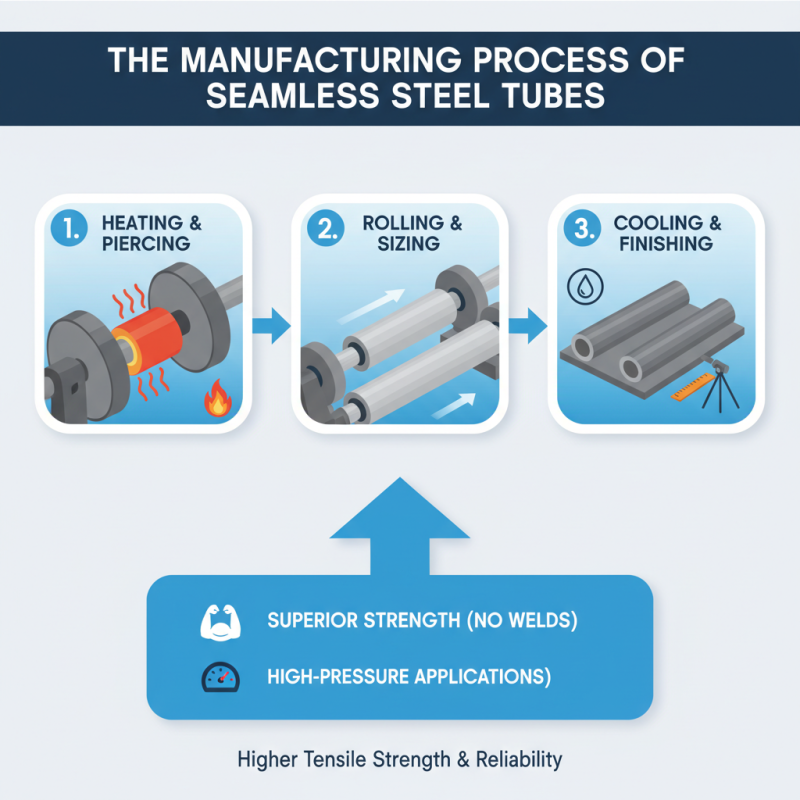
The manufacturing process of seamless steel tubes is intricate and demands precision. Generally, the process begins with a solid round steel billet. The billet is heated to a high temperature and pierced to create a hollow tube. This method of production eliminates the need for welding, offering superior strength and reliability. As per industry reports, seamless tubes exhibit higher tensile strength, making them suitable for high-pressure applications.
After the initial piercing, the tube undergoes elongation, often using rotary piercing methods. This technique enhances the wall thickness consistency. The hot-formed tube is then subjected to a series of elongation and reduction processes. These reduce the outer diameter and improve the mechanical properties. According to the Steel Market Development Institute, seamless steel tubes can achieve a yield strength of up to 90,000 PSI, depending on the treatment.
Post-manufacturing, tubes are subjected to rigorous testing. Non-destructive methods ensure that any internal defects are detected. Reports indicate that around 2-5% of produced tubes may not pass these quality checks. This highlights the need for constant reevaluation of manufacturing standards. Understanding this process is crucial for buyers, as it affects the product's integrity in critical applications.
Applications of Seamless Steel Tubes in Various Industries
Seamless steel tubes are critical in several industries. They are preferred for their strength, durability, and capacity to withstand high pressures. These tubes find essential applications in fields like oil and gas, automotive, and construction. For instance, in oil drilling, seamless tubes transport crude oil and natural gas efficiently. Their ability to resist corrosion and extreme temperatures makes them ideal for such roles.
In the automotive sector, seamless steel tubes are used in manufacturing various vehicle components. From fuel lines to chassis, their reliability enhances vehicle performance. In construction, these tubes contribute to structural frameworks, ensuring safety and longevity of buildings. The seamless nature of these tubes reduces the risk of leaks and failures, a crucial factor in high-stress applications.
Tips: When selecting seamless steel tubes, consider the specific requirements of your project. Check for certifications, as they ensure quality and compliance with industry standards. Regularly review your supplier’s track record; experience and reliability matter. Explore multiple options to find the best fit while avoiding hasty decisions.
Benefits of Choosing Seamless Steel Tubes for Buyers
Seamless steel tubes are crucial for various industries, including construction, automotive, and oil and gas. Their design lacks welds, enhancing their structural integrity. This feature leads to a lower risk of failure under high pressure. For buyers, this can translate into safer and more reliable applications.
One significant benefit is corrosion resistance. Seamless tubes often undergo treatment processes that enhance their lifespan. In environments where moisture and chemicals are present, durability is key. Buyers appreciate products that withstand wear and tear. This durability helps companies save on maintenance costs.
Cost-effectiveness is another factor. While seamless tubes may cost more upfront, their longevity reduces replacement frequency. Over time, this can lead to better financial outcomes. Sometimes, it is necessary to weigh initial costs against long-term value. Buyers must reflect on their specific needs and usage patterns when making their choice. Finding the right balance can be challenging but ultimately rewarding.
Key Factors to Consider When Purchasing Seamless Steel Tubes
When purchasing seamless steel tubes, various key factors should be considered. The manufacturing process significantly influences the product's quality. Seamless tubes are produced through a range of methods, such as extrusion or rotary piercing. Each method impacts the tube's structural integrity and application suitability. According to industry reports, up to 70% of buyers prioritize tube strength when making their selections. Hence, understanding the manufacturing process is essential.
Another critical factor is the material specification. Seamless steel tubes come in different grades, each suitable for unique applications. For instance, tubes made of alloy steel show enhanced performance and resistance to corrosion. Some reports suggest that poorly chosen materials may lead to up to 30% higher failure rates in critical applications. This highlights the importance of selecting the right grade based on your project requirements.
Additionally, dimensions and tolerances play a vital role. Seamless steel tubes need to meet strict dimensional criteria. Inaccurate measurements can cause compatibility issues, leading to production inefficiencies. Research indicates that nearly 25% of quality issues arise from dimensional discrepancies. Always verify that your supplier adheres to industry standards, such as ASTM or EN, to ensure reliability. These factors collectively impact the overall performance of seamless tubes in your projects.
What is Seamless Steel Tube and Why is it Essential for Buyers? - Key Factors to Consider When Purchasing Seamless Steel Tubes
| Dimension (mm) |
Material Grade |
Application |
Weight (kg/m) |
Standard |
| 25.4 x 2.5 |
ASTM A106 |
Oil & Gas |
7.85 |
API 5L |
| 38.1 x 3.1 |
ASTM A335 |
Power Generation |
8.00 |
ASME SA335 |
| 50.8 x 4.0 |
DIN 2391 |
Automotive |
10.00 |
ISO 9655 |
| 76.2 x 5.0 |
JIS G3445 |
Construction |
12.50 |
AISC |