How to Choose the Right Nickel Alloy Plate for Your Project?
Choosing the right nickel alloy plate for your project can significantly impact its success. Nickel alloys are known for their exceptional resistance to corrosion and high-temperature strength. According to a recent report by Grand View Research, the global nickel alloy market is projected to reach USD 22.27 billion by 2025. This growth highlights the increasing demand for these materials in various industries, including aerospace, marine, and chemical processing.
However, selecting the correct nickel alloy plate requires careful consideration. Factors such as the specific application, environmental conditions, and mechanical properties must be evaluated. For instance, the ASTM B162 and ASTM B575 standards provide guidelines on the composition and properties of various nickel alloys. Understanding these standards is crucial for ensuring that the selected material meets the project requirements.
It's essential to reflect on the potential pitfalls in choosing a nickel alloy plate. For example, a common mistake is overlooking the long-term compatibility of the alloy with its intended environment. Misjudgments in alloy selection can lead to costly failures. Therefore, thorough research and consultation with industry experts are key steps in making an informed decision.

Understanding Nickel Alloys: Key Properties and Applications
Nickel alloys stand out due to their unique properties. These materials possess excellent corrosion resistance, high-temperature strength, and good weldability. Industries often employ them in extreme environments. Common applications include aerospace, chemical processing, and marine engineering. Understanding these characteristics helps in making informed decisions.
Different nickel alloys cater to specific needs. For example, some offer superior strength while others excel in corrosive conditions. It's crucial to analyze project requirements before selecting an alloy. Factors include environmental exposure and operational temperatures. Mistakes in choosing the wrong alloy can lead to failures and increased costs.
Testing various nickel alloys in real-world conditions can reveal unexpected results. Sometimes, an alloy may perform well theoretically but fail practically. Continuous research and feedback are essential for improving material selection processes. Engaging with experienced professionals and reviewing case studies can provide valuable insights. This knowledge ultimately enhances project success and durability.
Assessing Project Requirements: Mechanical and Environmental Conditions
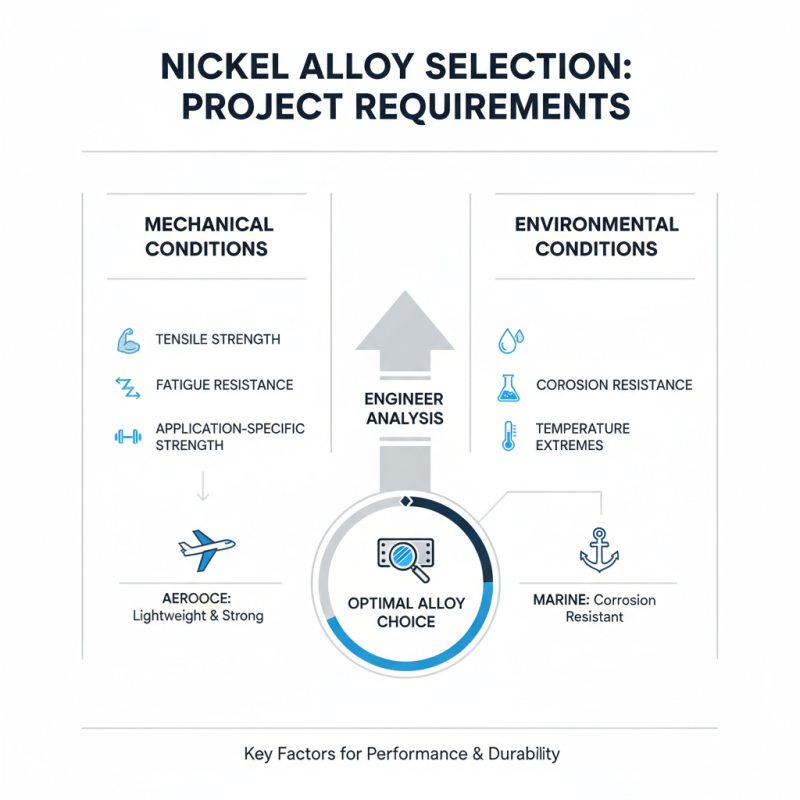
When selecting a nickel alloy plate, understanding your project's mechanical and environmental conditions is crucial. The mechanical properties of an alloy, such as tensile strength and fatigue resistance, can determine its suitability. Each application demands different strengths. For instance, in aerospace, lightweight yet strong materials are preferred. In contrast, marine environments require alloys resistant to corrosion. Engineers must analyze these factors thoroughly.
Environmental conditions also play a significant role. Factors like temperature and exposure to chemicals cannot be overlooked. High temperatures may weaken certain alloys, while aggressive chemicals can cause corrosion. It's vital to assess how these variables will affect the alloy over time. Evaluating the service life helps prevent premature failure.
Moreover, consider the manufacturing process. Not all nickel alloys are easy to fabricate. Some may require specific tools or methods. Additionally, reflect on availability and cost. A perfect choice may be out of reach financially or logistically. In the end, a practical approach often yields better results than seeking perfection. Understanding these aspects will guide you in making an informed decision.
Selecting the Right Nickel Alloy Plate: Criteria and Considerations
Choosing the right nickel alloy plate for your project requires careful thought and consideration. Nickel alloys, known for their strength and corrosion resistance, are widely used across industries. Research indicates that 65% of engineers prioritize mechanical properties when selecting materials. This highlights the need to thoroughly understand the specific demands of your application.
When evaluating nickel alloys, consider key factors like temperature resistance and corrosion resistance. A study by a leading material science organization found that nickel alloys can withstand temperatures over 1,000°F, making them ideal for high-heat applications. Additionally, certain nickel alloys exhibit superior resistance to chemical attack, particularly in environments exposed to acids. This can be crucial in industries such as petrochemicals and aerospace.
Pay attention to the alloy composition too. The proportions of nickel, chromium, and molybdenum can significantly influence performance. For example, alloys with higher nickel content may offer better ductility but less strength. This trade-off is essential, as it affects the long-term durability of your project. An honest assessment of these criteria can lead to better decision-making, ultimately ensuring that the chosen material meets your project's specific needs.
Evaluating Suppliers: Quality Standards and Certifications
When selecting a nickel alloy plate, supplier evaluation is crucial. Quality standards and certifications indicate a supplier's commitment to excellence. Look for compliance with ASTM standards. These standards ensure the material's performance meets industry needs. According to a recent report by the American Society for Testing and Materials, adherence to these standards can enhance material durability by 20%.
Supplier audits can be insightful. They reveal if the supplier maintains rigorous quality control processes. Certifications like ISO 9001 reflect a supplier's ability to consistently deliver quality products. A supplier with these certifications is often more reliable. However, not all suppliers may have this level of certification, which raises questions about their manufacturing processes.
Tips: Request samples before placing large orders. This allows you to evaluate the quality firsthand. Also, consider suppliers' transparency regarding their sourcing. Knowledge of raw materials can significantly impact your project’s outcome. Lastly, don’t hesitate to ask for references. Feedback from previous clients can provide valuable insights into a supplier’s reliability.
Cost-Benefit Analysis: Budgeting for Nickel Alloy Plates in Projects
When budgeting for nickel alloy plates, a cost-benefit analysis is crucial. Start by assessing the specific demands of your project. Consider the environment where the alloy will be used. High-temperature and corrosive settings require more durable materials. This durability often comes at a premium.
It's essential to weigh the initial costs against the long-term benefits. Cheaper materials may save money upfront, but they can lead to higher maintenance and replacement costs. Ask yourself: will opting for a lower-cost alloy force my project to compromise on quality?
Additionally, think about future scalability. As your project evolves, will the chosen alloy still meet performance demands? It’s easy to underestimate the impact of materials on overall project success. Take the time to analyze every aspect, including potential risks associated with material failure. This reflection can lead to smarter, more informed choices in the long run.
This chart compares typical nickel alloy plates based on their cost per kilogram and corrosion resistance performance. Selecting the right alloy involves balancing budget constraints with material durability, ensuring optimal long-term project outcomes.